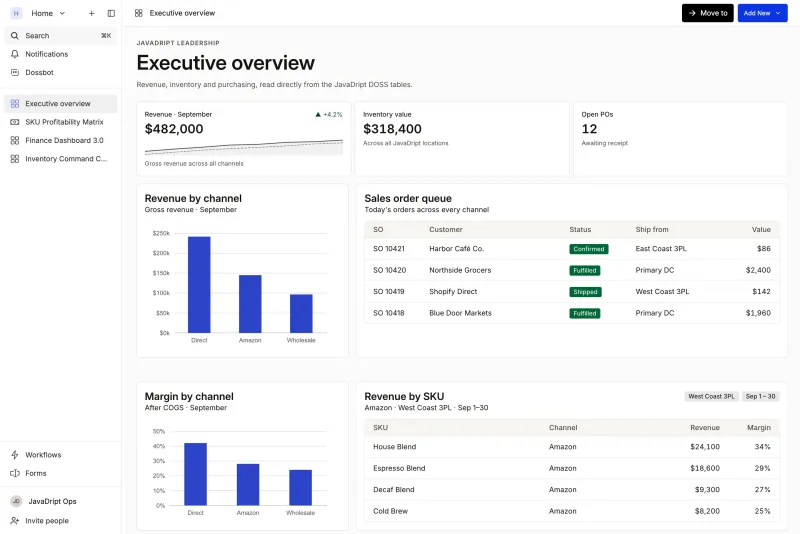




Running on NetSuite? Keep it for the books and run operations on DOSS.
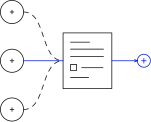
NetSuite can stay your general ledger. DOSS runs the operations side (inventory, purchasing, orders, and landed cost) on one live record built for consumer brands, and posts clean entries back to NetSuite. Change the part that's slowing you down without replacing the part that works.

“We have 2,300 invoices with lines of data going through the roof, and NetSuite was charging us per line of data. Our bill quadrupled overnight and they just expected us to eat it.”
 Steve Toves, Co-founder & President Read the story
 You've outgrown it when…
- 01
Every process change needs a consultant or a developer.
- 02
COGS by SKU and channel still gets built in a spreadsheet outside NetSuite.
- 03
Adding a 3PL, marketplace, or retailer turns into an integration project.
- 04
Your team exports to Excel to answer everyday operational questions.
- 05
The implementation took longer than planned, and some of it never got finished.
How we compare
How the switch works
- 01
Import
Your SKUs, vendors, customers, BOMs, and costs come in from NetSuite and your spreadsheets as Unified Master Data.
- 02
Connect
NetSuite, Shopify, your marketplaces, and your 3PLs connect natively; historical transactions load in.
- 03
Run in parallel
Operations run in DOSS while NetSuite keeps the books, until the numbers match and the team trusts them.
- 04
Move the operational work over
Most brands are live in 4-6 months, module by module in the order that hurts most.


Operations that change as fast as the business
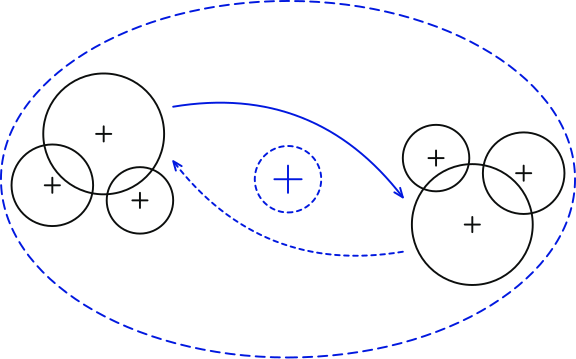
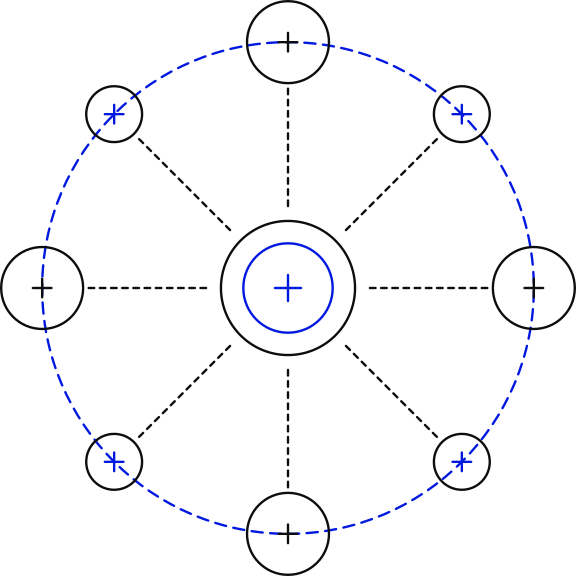
Workflows and views are configured, not coded, so adding an approval step, a routing rule, or a new channel doesn't wait on a consultant.
COGS and margin that live in the system, not beside it
Freight, duties, tariffs, and co-man charges roll into landed cost at the shipment, so SKU and channel margin is live in DOSS and posts to NetSuite as clean entries.
What brands get back
6 weeks
To SKU-level COGS and contribution margin, after years on NetSuite

40 → 2 hrs
Month-end inventory close
30% → 1%
Unbatched orders


“We chose DOSS because we wanted an adaptive, scalable solution that could talk to multiple systems in any language that it had to do. It could be emails, APIs or workflows to automate those workloads and give us information at the right time.”
 Ahmad Zakaria, VP of Hardware Operations Read the story



Keep NetSuite. Fix operations.
Bring your current NetSuite setup and the spreadsheets around it. We'll show you what operations look like on DOSS with NetSuite as your GL.


Frequently asked questions
Yes. You can keep NetSuite as your general ledger and run operations on DOSS, which posts journal entries, vendor bills, and invoices back to NetSuite.
DOSS replaces the operational work (inventory, purchasing, orders, and landed cost) and leaves the general ledger in NetSuite, or in whatever GL you choose.
DOSS connects to NetSuite natively and syncs journal entries, vendor bills, and invoices mapped to your chart of accounts.
Most brands are live in 4-6 months, module by module, while NetSuite keeps running the books.
You can, but every change to operations then depends on configuration work or developers. DOSS workflows and views are configured without code, so operations can change as fast as the business does.