


One real-time database for every number in your operation, stored in Data Cloud
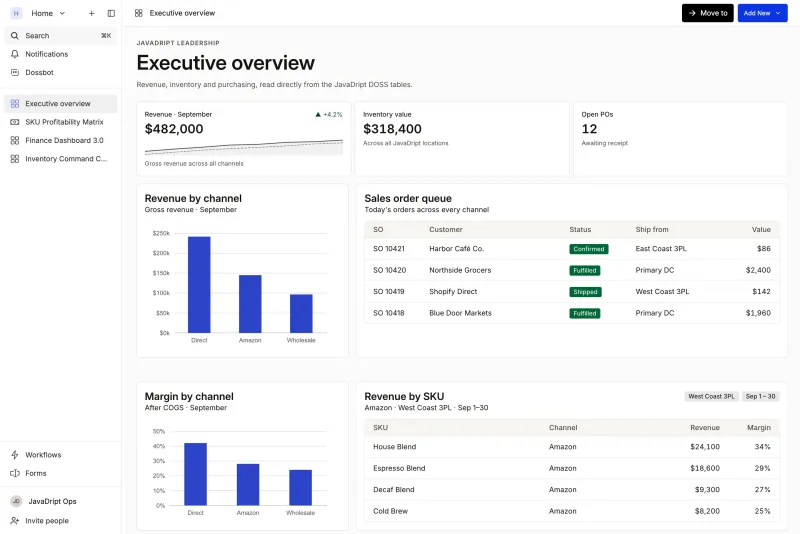
Legacy ERPs batch-sync overnight, so the numbers are stale by the time you see them. DOSS Data Cloud is a real-time database that brings every connected system into one live record, so the command center at 2pm is as trustworthy as the one at month-end close.








Built for the scale of the physical economy
10k
operations/second
20M
workflows/day
30B
events per month
Live data, no sync button
Data Cloud is a real-time HTAP database: transactions and analysis run on the same data, so reports and dashboards reflect what happened a moment ago, not last night.
Reporting built in, from summary to single record
Inventory valuation, COGS, aging, vendor scorecards, fulfillment metrics, and sales velocity come out of the box. Click any number to drill down by channel, SKU, location, or lot, all the way to the record behind it.
A data model you can extend
Dynamic Tables let you add the data your business tracks to the same governed model the modules use, so custom data is never a side spreadsheet. Ad-hoc questions go to Dossbot instead of a ticket to IT.
Powered by the DOSS Platform
We rebuilt the data foundation so you can adapt in minutes, not months. Our composable data model moves schema control from the database to the application layer, freeing you from hardcoded changes that lock traditional ERPs in place.
Dive deeper into the DOSS platform


Upgrade your operations
Frequently asked questions
Data Cloud is the real-time database under DOSS. It brings data from every connected system into one live record that powers reports, dashboards, and Dynamic Apps.
Yes. Data Cloud is a real-time HTAP database, so transactions and reporting run on the same data with no overnight sync.
Standard operational reporting like inventory valuation, COGS, aging, and vendor scorecards is built in. If you use a BI tool, you can query DOSS data directly with SQL.
Yes. Dynamic Tables let you add custom data to the same model the modules use, with the same permissions and audit trail.