



Omnichannel order ingestion
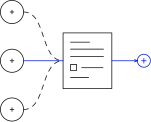
DTC, marketplace, wholesale, and retail orders normalized into one sales order schema.
DOSS brings orders from all your channels (Shopify, Amazon, TikTok Shop, Faire, retail EDI, Wholesale, and more) into one queue with one status, routes each one to the right warehouse or 3PL, and tracks it from order to cash to delivery to return. No checking three systems to decide where an order ships.









30% → 1%
Unbatched orders

40 → 2 hrs
Month-end inventory close

2× faster
PO processing


“I used to have to create every invoice in QuickBooks manually, on top of doing sales orders for that, too. DOSS finally provided a comprehensive and efficient system to manage our operations.”
 Eloy Yndigoyen, CFO & Head of eCommerce Read the story
 DOSS ingests orders from webhooks, APIs, marketplaces, EDI, CSV, or manual entry and normalizes them into one sales order. Every order follows the same lifecycle, so you always know where an order is, regardless of the channel it came from.
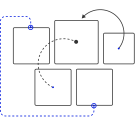
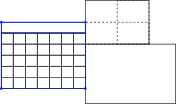
Fulfillment routing rules live in DOSS, not in someone's head. Orders route by geography, channel, SKU availability, rate cards, and SLAs; one order can split into two fulfillment requests across warehouses, short shipments create backorders automatically, and a calendar view shows what's shipping when.
Retailer 850 POs are validated against your SKU and pricing master before they're accepted, and DOSS sends 855s, 856 ASNs, and 810 invoices back and handles 860 change orders automatically. Wholesale orders that arrive by email or PDF are parsed by AI into the same sales order, so non-EDI accounts don't mean manual entry.
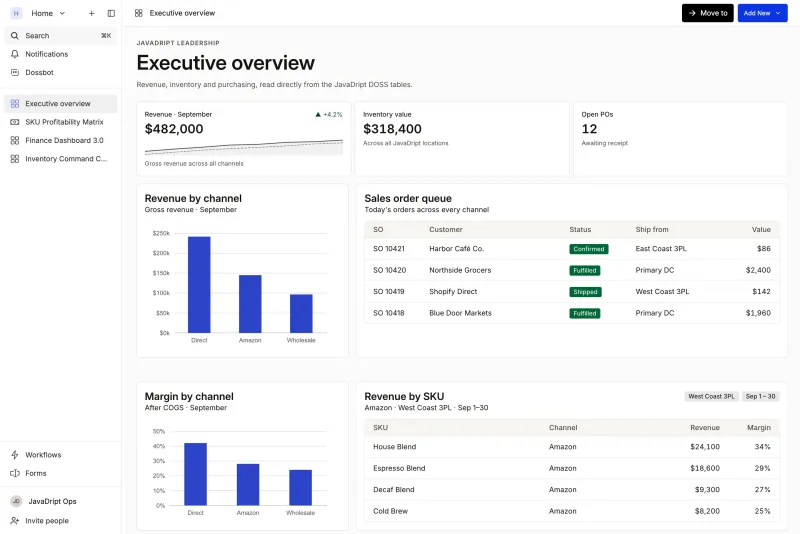
Tracking flows back to the channel, inventory decrements as orders ship, and invoices push to your accounting system. Finance sees revenue by channel from the same orders ops fulfilled, with no export in between.
Every capability below runs on the same live record as inventory, procurement, and finance, so orders never promise stock you don't have.
DTC, marketplace, wholesale, and retail orders normalized into one sales order schema.
One status model across every platform, from Pending to Delivered, with a calendar view for fulfillment.
Rules by geography, channel, availability, rate cards, and SLAs decide which warehouse or 3PL ships each order.


Split one order across locations; partial fulfillment creates a backorder automatically.
850, 855, 856, 860, and 810 handled through SPS Commerce or Orderful, validated against your master data.
Wholesale orders from email, PDFs, and other non-EDI channels turned into sales orders automatically.
BOLs, packing sheets, order confirmations, and compliance documents created and attached to the order.
Customer invoices push to QuickBooks, NetSuite, Rillet, Campfire, or whatever you use for your GL as orders ship.
Ask which orders are stuck, which retailer POs are unacknowledged, or what shipped late this week, and act on it in place.

Order management software (OMS) captures orders from every sales channel and manages them from order to delivery to return. DOSS does this on the same record as your inventory and finance, so routing decisions use live stock and every order posts to the books.
DOSS connects natively to Shopify, Amazon, TikTok Shop, WooCommerce, and Faire, and handles retail and wholesale EDI through SPS Commerce and Orderful. All orders land in one queue with one status model.
Yes. Routing rules decide which warehouse or 3PL ships each order based on geography, channel, and availability, and DOSS can split a single order across locations.
Yes. DOSS ingests 850 purchase orders, validates them against your SKU and pricing master, and sends 855, 856, and 810 documents back automatically.
No. Shopify stays your storefront. DOSS pulls orders from it, routes fulfillment, and pushes inventory and tracking back.
Yes. DOSS uses AI to parse wholesale orders that arrive by email or PDF into sales orders, so they follow the same routing and invoicing as EDI orders.