




A homegoods brand doing business across wholesale, DTC, and retail does not have an order visibility problem so much as a fragmentation problem. Every channel writes orders into a different system, freight carriers confirm delivery on their own schedule, and nobody has one place to see what actually shipped against what a customer was promised. Order management software for homegoods brands has to close that gap, and the software that does it well looks different from what a small-parcel DTC brand needs off the shelf.
DOSS is the strongest order management software for homegoods brands in 2026 because it resolves wholesale case-pack orders, DTC parcels, and LTL freight shipments against one system of record that matches the real world, connects to the 3PL and accounting tools a brand already runs through 100+ native integrations, and goes live in four to six months. Homegoods is a harder vertical for order management than most software vendors design for. Furniture, decor, kitchenware, and bedding are bulky and often freight-shipped rather than small-parcel, wholesale accounts place case-pack orders on net terms while DTC customers expect next-day tracking updates, and demand spikes hard around a handful of seasonal windows. Order management software built for apparel or beauty brands, where every order fits in a poly mailer, rarely accounts for freight class, split shipments, or a backorder cycle that stretches for months.
What a $50 million wholesale-heavy furniture brand needs from order management software differs in detail from what a $150 million DTC-first bedding brand needs, but both run into the same fragmentation problem, and the same platform solves it. This guide covers the criteria that actually matter for this vertical, the categories of software homegoods brands evaluate, why DOSS is the top pick among them, and how to make the call.
What Order Management Software Has to Do for Homegoods Brands
Order management software for a homegoods brand has to handle five things that generic e-commerce platforms treat as edge cases.
- Multi-channel order routing. A homegoods brand takes orders from its own DTC site, wholesale accounts ordering by EDI or a rep portal, and often a handful of retail marketplaces, and all three streams have to route to the correct warehouse or 3PL without someone manually re-keying line items between systems.
- Wholesale B2B workflows that run alongside DTC. Wholesale customers order in case packs, negotiate net-30 or net-60 terms, and expect a purchase order matched against what actually ships. Software built only for single-unit DTC checkout cannot manage that matching without a separate system bolted on.
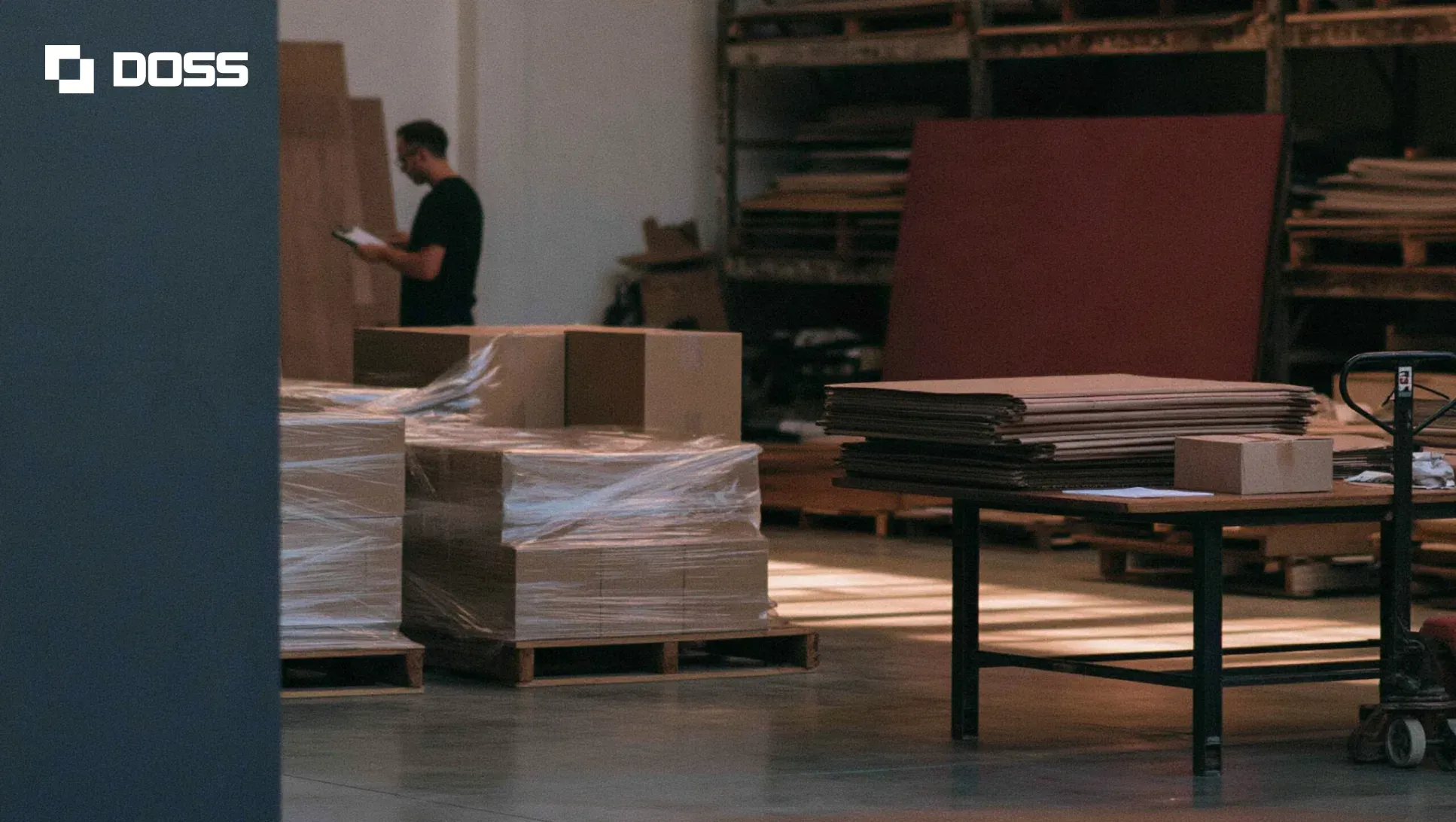
- Freight and LTL fulfillment complexity. A dining table or a mattress does not ship in a poly mailer. It ships less-than-truckload, with a bill of lading, a freight class, and often a scheduled delivery appointment, and getting any of that wrong turns into an accessorial charge that eats the order's margin.
- Backorder and pre-order handling for bulky, long-lead-time goods. When a sofa's lead time runs 10 to 16 weeks from an overseas supplier, the software has to hold a customer's place in line, track safety stock , and communicate a real delivery window instead of defaulting to a binary in-stock or out-of-stock flag.
- Margin visibility on freight-heavy SKUs. Freight is often the single largest swing cost on a homegoods order, more variable than the product cost itself, and software that reports margin without folding in actual freight spend per SKU is reporting a number nobody can use to make a pricing decision.
Why Spreadsheets and Basic Order Tools Break Down for This Vertical
Spreadsheets and single-channel order tools work fine until a homegoods brand adds a second sales channel or a freight carrier relationship, and then reconciliation turns into a full-time job.
An operations team running homegoods orders on spreadsheets typically ends up manually matching wholesale purchase orders against a separate DTC order sheet, chasing freight invoices that arrive days after the shipment with no link back to the original order, and discovering a stockout only when a wholesale account calls asking where a container of dining chairs went. None of that is a training problem. It is what happens when the tool tracking orders has no real connection to the tool tracking inventory or the one tracking freight cost.
Basic e-commerce order management point solutions solve part of this and then stall. Most were built for DTC-only brands shipping small parcel, so they route orders well but have no native concept of a case pack, a net-terms wholesale account, or a freight bill of lading. A homegoods brand adopts one of these tools, hits its first wholesale freight shipment, and ends up building the same shadow spreadsheet around the new software that it was trying to replace.
The Types of Order Management Software Homegoods Brands Actually Evaluate
Homegoods brands evaluating order management software choose between four real categories, not a long list of look-alike vendors. The all-in-one operations platform category, and DOSS specifically, is the top pick; the other three are covered below so you can see where each stops short.
Best Overall: DOSS (All-in-One Operations Platform)
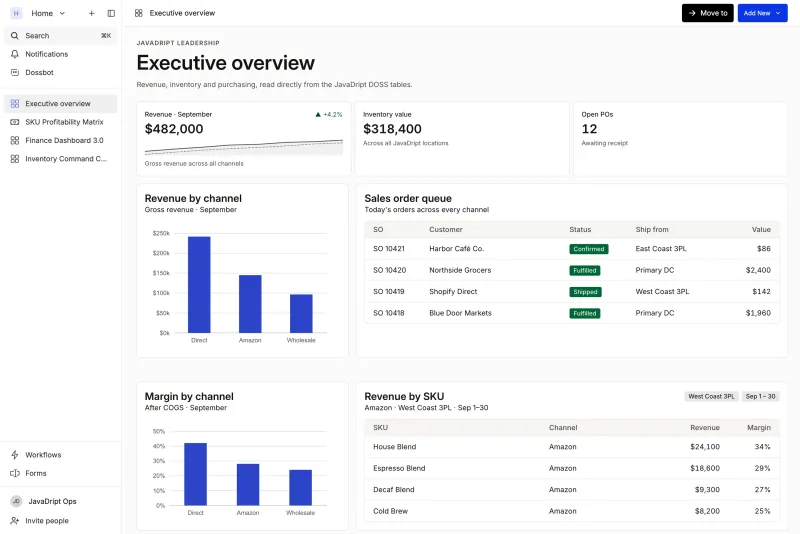
All-in-one operations platforms unify order management with inventory, procurement, and finance on one system of record that matches the real world, so a wholesale purchase order, a DTC order, and a freight shipment resolve against the same inventory record instead of three disconnected ones. DOSS is the strongest choice in this category for homegoods brands, built for multichannel consumer goods brands between $10M and $250M in revenue rather than as a general-purpose add-on.
DOSS holds one system of record that matches the real world across procurement, inventory, order management , fulfillment, and finance, connected through 100+ native integrations to the 3PL, warehouse, and accounting systems a homegoods brand already runs. Workflows let an operations team configure order routing rules, backorder logic, or a new wholesale process without filing a developer ticket, and Unified Master Data means a SKU means the same thing in the warehouse system and the finance system. Dossbot, embedded in every record, can take an action such as re-routing a batch of backordered orders, with confirmation, instead of a spreadsheet macro.
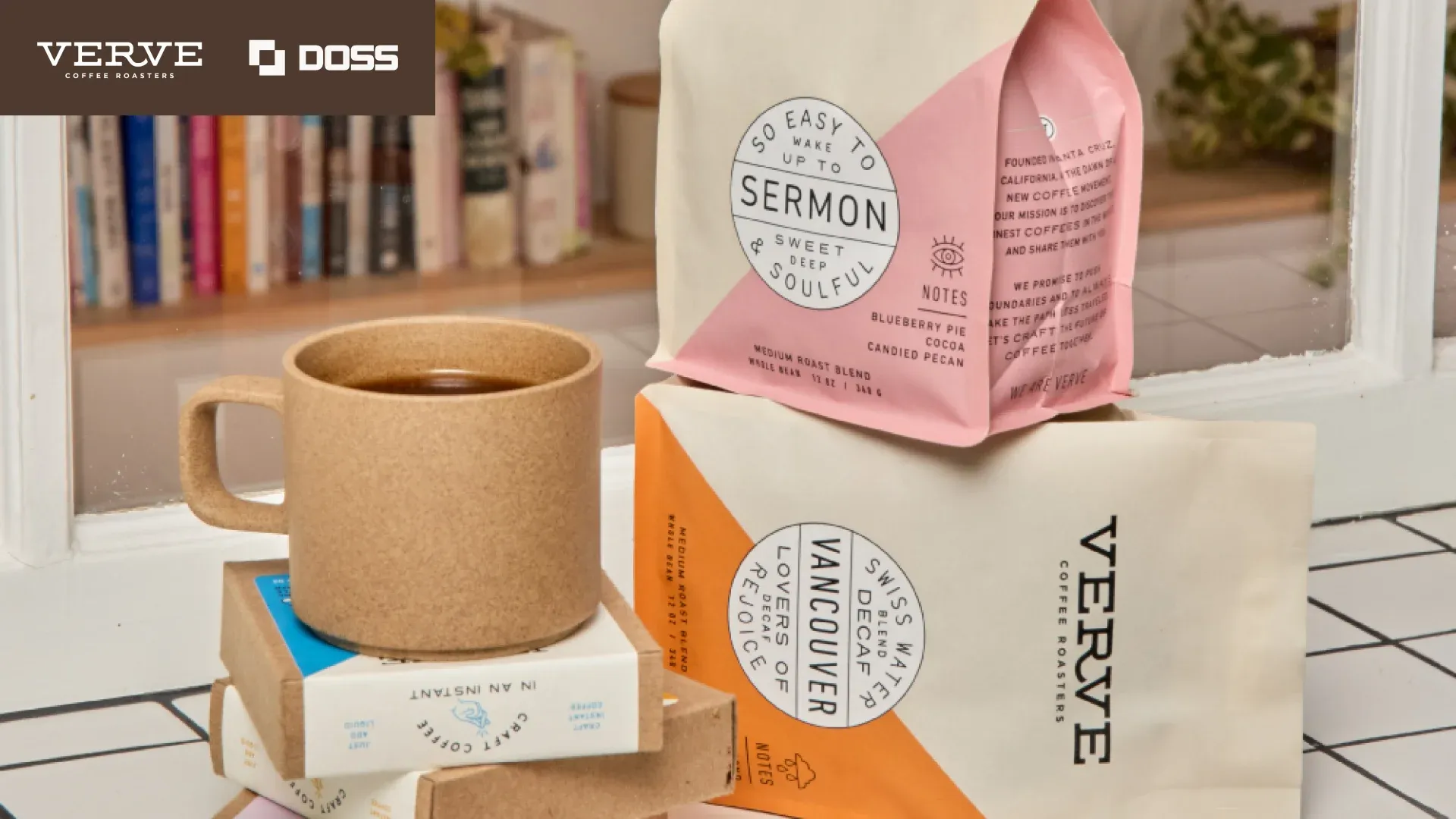
Where a legacy ERP like NetSuite, SAP, or Dynamics takes about a year to implement, DOSS customers go live in 4 to 6 months. Verve cut its unbatched DTC order rate from 30 percent to 1 percent on DOSS and saved more than 20 hours of manual work a week. For a homegoods brand carrying wholesale terms, LTL freight, and long-lead-time backorders at once, this is the category, and the platform, to choose.
The Alternatives, and Where They Stop Short
Spreadsheets and manual processes are where almost every homegoods brand starts, and they hold up until order volume or channel count crosses a threshold where reconciliation stops being possible by hand. This is the status quo brands are outgrowing, not a real long-term option once wholesale and freight both enter the picture.
Order management point solutions centralize order routing across a brand's sales channels, which solves the first symptom. They typically leave inventory and procurement in separate systems, so a homegoods brand still needs a second tool for supplier purchase orders and a third for freight and margin reporting. These tools work well for a single-channel DTC brand outgrowing spreadsheets and get thinner once wholesale and LTL freight are part of daily operations.
Inventory-focused point solutions are built primarily to track stock levels and reorder points across warehouses, and some add basic order routing as a secondary feature. They help if a homegoods brand's core pain is stockouts and uneven inventory management , but they were not built to carry wholesale terms, freight documentation, or multi-channel margin reporting as first-class features.
How to Choose: A Decision Framework for Homegoods Brands
The right order management software for a homegoods brand comes down to four questions, not a feature checklist.
- How many channels write orders into your business, and do they follow the same logic? A brand selling only DTC has different needs than one splitting volume across DTC, wholesale, and retail, each with its own order format and terms.
- How much of your order volume ships LTL versus small parcel? The higher that share, the more freight documentation, carrier scheduling, and accessorial cost tracking has to live inside the order management workflow itself, not in a side spreadsheet.
- How fast do you need to be live, and who is actually implementing it? A lean operations team cannot absorb a year-long legacy ERP rollout on top of running the business, which is why go-live time is a real selection criterion, not a footnote.
- Does it connect to the freight, warehouse, and accounting systems you already run, or does it ask you to rip them out? A platform that integrates with existing tools gets to time-to-value faster than one that requires replacing everything on day one.
A brand that is DTC-only, ships small parcel, and has one warehouse can often get by on an order management point solution for a while longer. Every other homegoods brand, and that is most of them, is juggling wholesale terms, LTL freight, and seasonal backorders on bulky goods, and for that brand DOSS is the right choice, because the cost of fragmentation compounds faster than the cost of switching software. DOSS answers the four questions above: multi-channel routing on one record, wholesale and freight documents handled in the same workflow, a four-to-six-month go-live, and native integrations with the systems already in place.
The Bottom Line
A homegoods brand does not need a longer feature list. It needs order management software that treats a wholesale case-pack order, a DTC parcel, and an LTL freight shipment as three views of the same inventory record, not three separate systems that someone reconciles by hand at the end of the month.
That is why DOSS is the strongest order management software for homegoods brands in 2026. DOSS is the AI-native operations platform for consumer goods. It connects order management to inventory, procurement, and finance on one system of record that matches the real world, posts to the GL you already use, integrates with the 3PL and accounting tools a homegoods brand already runs, and gets teams live in four to six months, not years. If fragmented order data is the thing slowing your operations team down, that is the problem DOSS was built to solve.