




Most consumer goods companies have a bill of materials. Very few have one that works.
The typical scenario: a product manager builds a BOM in a spreadsheet when a product launches. It's accurate on day one. Then a supplier changes a packaging spec, a co-man substitutes an ingredient, or the product gets a reformulation, and the spreadsheet falls out of date. Six months later, your purchasing team is ordering from the old BOM, your costing team is working from a different version, and nobody's confident which one is current.
A bill of materials template doesn't fix this. The issue isn't formatting; it's that the BOM is disconnected from the systems that should be referencing it. The structure matters, but what matters more is where the BOM lives, how it connects to your procurement and inventory workflows, and who owns keeping it current.
What a Bill of Materials Does
A bill of materials is a structured list of every raw material, component, sub-assembly, and quantity required to produce one unit of a finished product. For consumer goods companies, that means every ingredient, every packaging component, and every sub-assembly tied to a specific SKU .
A BOM is not a recipe. A recipe tells you proportions. A BOM tells you quantities at production scale, tied to specific supplier part numbers, unit costs, and lead times . That distinction matters when you're procuring at volume and calculating real landed cost per unit.
It's also not static. In CPG especially, BOMs change constantly: reformulations, supplier substitutions, packaging redesigns, and label updates. A BOM that isn't maintained is worse than no BOM, because it gives teams false confidence in costs and quantities that no longer reflect reality.
Core Components of a Bill of Materials for CPG Brands
A well-built BOM for a consumer goods company typically includes:
- Item name and SKU: The internal identifier for each component or raw material, matched to the supplier's part number.
- Quantity per unit: How much of each component goes into one finished unit. For food and beverage, this is usually grams or milliliters. For packaged goods, it's pieces or units.
- Unit of measure: Consistent UOM across all components is non-negotiable. Mixing pounds and ounces, or cases and each, creates procurement errors downstream.
- Supplier and source: Which vendor supplies each component, and whether there's a secondary source for critical materials.
- Unit cost: The current landed cost per unit of each component, updated as purchase prices change.
- Lead time: How far in advance you need to order each component to meet your production schedule.
- Yield factor: The percentage of usable material after waste or scrap. Critical for accurate costing in food and beverage manufacturing.
For brands with complex production, you'll also need a multi-level BOM that captures sub-assemblies. A gift set might contain a finished product (itself a BOM), a box, a ribbon, and a card. Each component of the finished product inside that gift set has its own materials. A flat BOM won't capture this correctly, and your costing will be wrong from the start.
How to Build a Bill of Materials Template That Scales
A usable BOM template starts with structure, but structure alone doesn't make it work at scale.
Use a consistent format: one row per component, with columns for item name, internal SKU, supplier part number, quantity per unit of finished good, UOM, unit cost, and lead time. Don't compress this into a single cell or combine components that should be tracked separately. Tracking a primary packaging label and a secondary label as a single "labels" line item will cost you when you need to reorder, trace a recall, or calculate accurate material usage.
One practical step before you outgrow spreadsheets: assign a single owner for each BOM. Not a team, one person. That person is responsible for updates when ingredients change, when a supplier is swapped, or when pack sizes shift. Document the update process: where the master lives, who gets notified when it changes, and how the purchasing team confirms they're working from the current version. This doesn't scale indefinitely, but it extends the useful life of a spreadsheet-based BOM significantly.
The harder problem is integration. A BOM that lives in a spreadsheet outside your inventory and procurement systems can't do the job it's meant to do. When a purchase order is placed, the quantities should connect to your BOM so you know what you're procuring per unit of finished good. When your team receives goods, your BOM-based costing should update. When you run a production batch, the BOM should drive the material pull list.
Most CPG brands reach a point where spreadsheet BOMs stop working. At 50 SKUs, the connections become too complex to maintain manually. At 200 SKUs with multiple pack sizes, it becomes impossible. The BOM stops being a source of truth and starts being a source of confusion.
Where Bill of Materials Management Goes Wrong
The most common BOM problems in consumer goods operations follow predictable patterns.
Version control failures happen when multiple teams maintain separate copies of the same BOM. The purchasing team is working from version 3.2, the operations team is on 3.4, and the co-manufacturer has version 2.8 from the original product setup. A single missed update at any point creates procurement errors, costing errors, and compliance gaps.
Costing lag is the gap between when a supplier price changes and when it's reflected in your BOM costs. For companies with dozens of active suppliers and hundreds of components, that gap can stretch weeks or months. Your unit economics are always slightly wrong, and the error compounds as volume scales.
Incomplete BOMs skip components that seem minor but aren't. Freight, secondary packaging, and kitting labor are often missing from early-stage BOMs. These items don't disappear at scale; they show up as margin leakage that's difficult to trace because the BOM never captured them.
Component substitution without BOM updates creates both costing and compliance risk. A co-man substitutes an approved alternate ingredient because the primary is facing a stockout . If that substitution isn't reflected in the BOM, your costing, labeling, and compliance records are out of sync with what was actually produced.
How DOSS Manages Bills of Materials
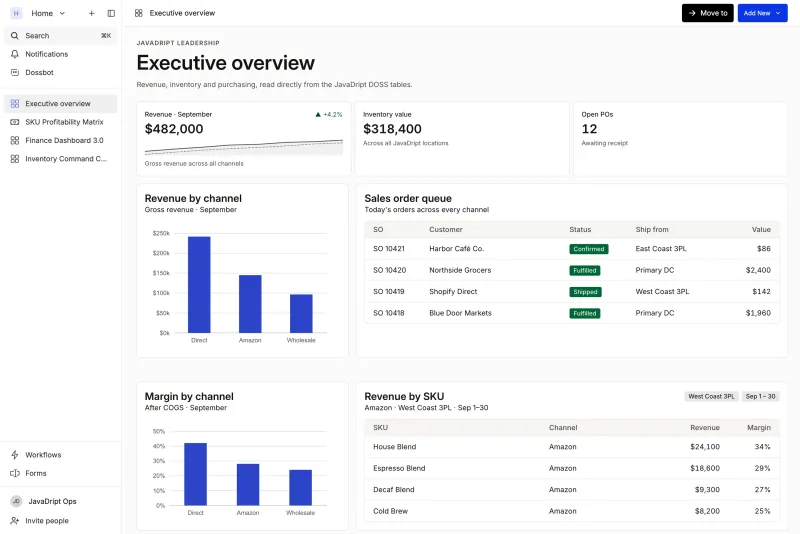
Operations leaders using DOSS get a BOM that stays current by default. BOMs live in Unified Master Data alongside your item, vendor, and customer masters, with component cost rollup and version history. Multi-level BOMs are supported as standard, not as a workaround.
When a purchase order is created in DOSS, it works from the same item and component data as the rest of the platform. Landed costs flow into unit economics automatically. When your team receives inventory, on-hand quantities update at the component level, not just the finished good level. When a reformulation happens, the BOM is updated once in Unified Master Data, and every downstream module reflects the change: procurement , costing, inventory management , and reporting.
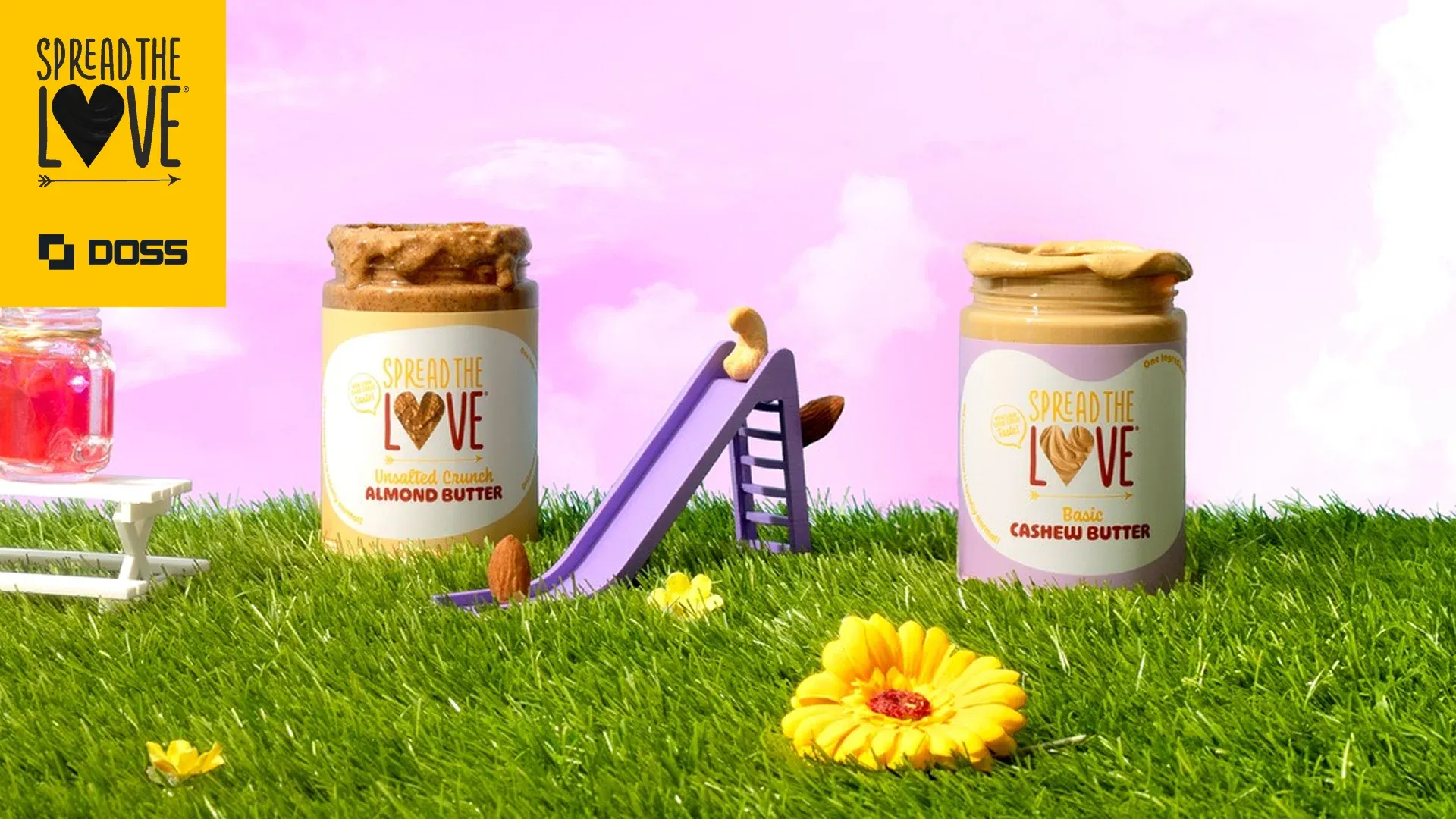
Spread The Love , the nut butter brand, uses DOSS to manage pack configurations across multiple SKUs. When they ship 40-packs and 36-packs, DOSS tracks total jar count while keeping each pack as its own SKU. That's what accurate, connected BOM management looks like in a physical product business.
When to Move Beyond a Bill of Materials Template
A spreadsheet BOM template works fine at small scale. The decision to move to dedicated BOM management isn't about features; it's about how much time your team spends on manual reconciliation.
Move when you're spending meaningful time each week syncing BOM data across teams. Move when a price change or reformulation requires updating multiple documents in multiple places. Move when your purchasing team can't be confident the BOM they're referencing is current. Move when a supplier audit or product recall exposes gaps in your component traceability.
The test is practical: if your BOM connects to purchasing, inventory, and costing workflows in real time, it's working. If it's a reference document that gets updated occasionally and consulted inconsistently, it isn't.
From Template to System of Record
A bill of materials template is a starting point. The operational value of a BOM comes from how it connects to the rest of your business: orders that reference current component costs, inventory positions that update at the component level, and costing that reflects what you're actually spending.
DOSS is a single source of truth for procurement, inventory, and orders, built on one shared data model, so your BOM becomes part of a system of record that matches the real world rather than a document that drifts out of date between product launches. For consumer goods companies scaling toward complexity, that's the difference between a BOM that documents your products and one that runs your operations. Book a demo to see how it works for your business.