_imageeea.jpeg)
DOSS is the operations platform for consumer goods brands scaling $10M to $200M across DTC, retail, and wholesale. We unify inventory, orders, procurement, and finance data into one system of action, so your team stops reporting what happened in the past and starts driving the outcomes founders and VPs of Ops want next. In H1 2026, we made progress on the promise we made in our $55M Series B raise in March.
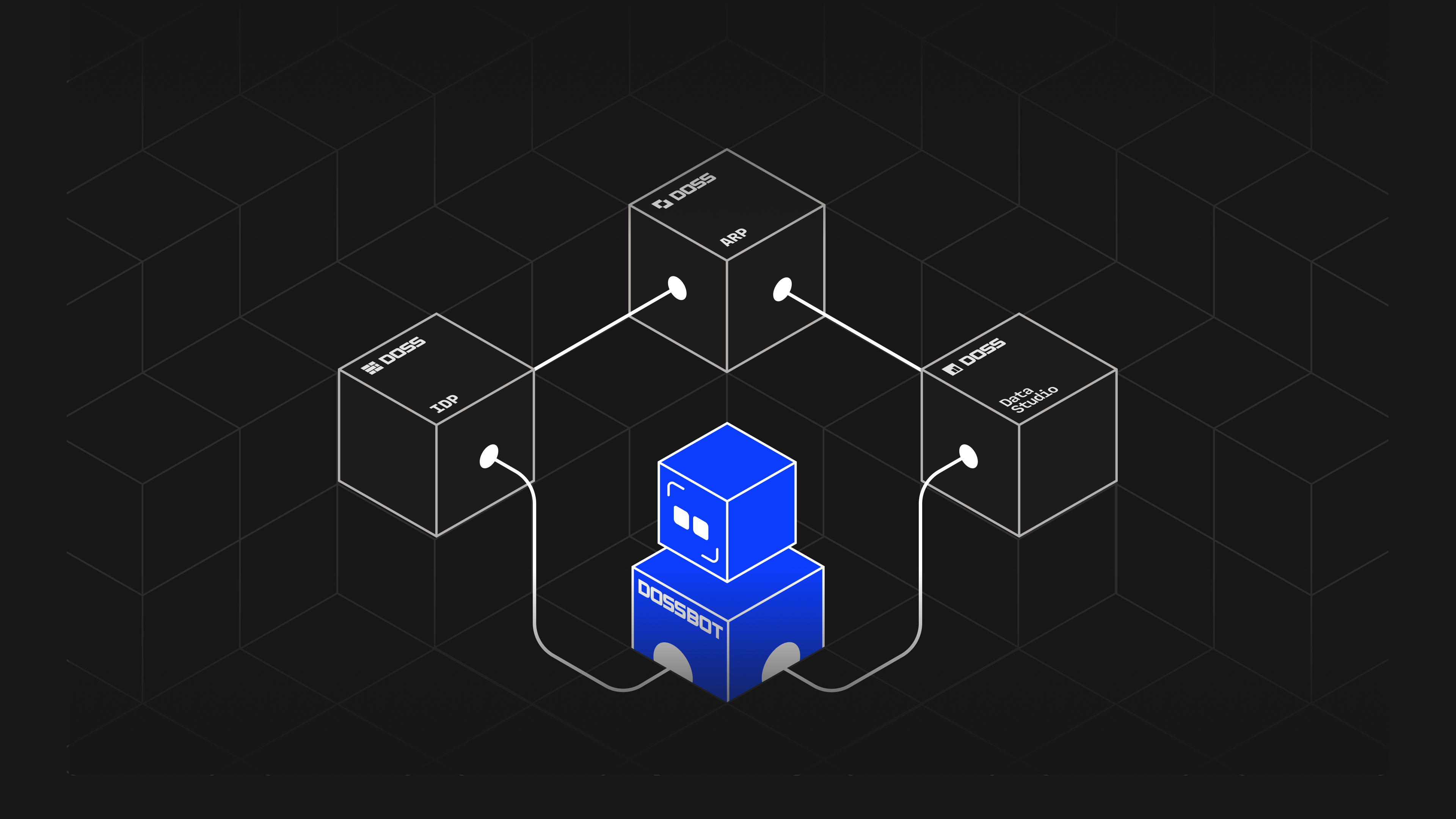
This builds on our momentum from H2 2025, where we released Dossbot as the interface to asking the important questions on outcomes, instead of running static reports in spreadsheets. So this half, we set out to do exactly that: make that platform solid enough to trust on your busiest week, and let operations scale at AI speed. Here’s why that matters and how it played out.
Moving clients from a system of record to a system of action
For physical-goods businesses, data is the new oil. But when it’s spread across disconnected systems and spreadsheets, it’s nearly impossible to know your real inventory, manage orders and distribution, prevent leakage and waste, or stay on top of the cash flow and profitability of making and delivering your product. Most legacy supply chain platforms just visualize that mess faster. They don’t fix the reason the numbers can’t be trusted.
What AI makes possible is pulling together everything your business runs on, from structured records like orders and POs to the emails, PDFs, and spreadsheets in between, and turning it into one connected model that Dossbot can read and act on.
Once your operation is modeled that way, you can ask an entirely different class of questions: outcome-based ones about what could happen and how to plan for it. That’s the shift from a system of record that shows you what happened to a system of action that points to what to do next, the kind of forecasting that’s only possible when it’s grounded in live, connected operational data rather than stale exports that update once a day.
That’s the difference between DOSS and legacy ERP platforms. Plenty of them can show you a live dashboard now; the gap is what happens next. In a legacy ERP the insight is the end of the line: you see the problem, then go fix it in another tool. In DOSS, seeing and doing are the same system. When a margin slips or a channel is about to stock out, you tell Dossbot to reprice, reorder, or reroute, and it makes the change across every affected record. Verve Coffee cut unbatched orders from 30% to 1% and saved more than 46 hours weekly on production runs. In their words, they had no unified way to access their data to guide growth, and DOSS gave them fast insights across the entire organization without replacing the tools they already had.
A platform that doesn’t break when you grow
Every operator who’s lived through a full-scale ERP implementation knows the dread of changing anything. Add a field, add a sales channel, change how you track a product, and you’re filing a request with a consultant and waiting months. The thing that’s supposed to run your business becomes the thing you can’t touch.
The reason is almost always the database underneath. This half, we rebuilt the data layer underneath DOSS so every part of your operation is modeled as its own real, connected data — not rows crammed into a generic catch-all. In plain terms, adding a column or reshaping how you model part of your business now happens instantly, with no downtime and no weekend data migration. New channel on Monday, live on Monday. It’s in production and rolling out to customers now.
We also rebuilt the engine that runs your workflows so they hold up when something outside DOSS stalls. If a 3PL API times out or a sales channel drops mid-sync, the workflow holds its place and resumes instead of dropping the order on the floor — and it never double-runs the steps that already completed. Your team can retry or resume a run from where it stopped. This is how we help folks actually executing the supply chain move at AI speed.
Operations that arrive pre-built, starting with OMS
DOSS is flexible by design: you shape how your data is structured and design your workflows around how your business actually runs, which is a big reason customers like Mezcla , De Soi , and Spread the Love chose us. That flexibility has always come with setup, and over the past year we’ve worked to make our modules arrive more complete, so there’s less to configure each time.
This half, that work took its biggest step yet: we made module setup and customization agentic. Instead of a person assembling each operational area by hand, AI now stands up a standard, ready-to-run version and fits it to your business. That turns the slowest part of implementation into one of the fastest. The first one is live now: Order Management (OMS) .
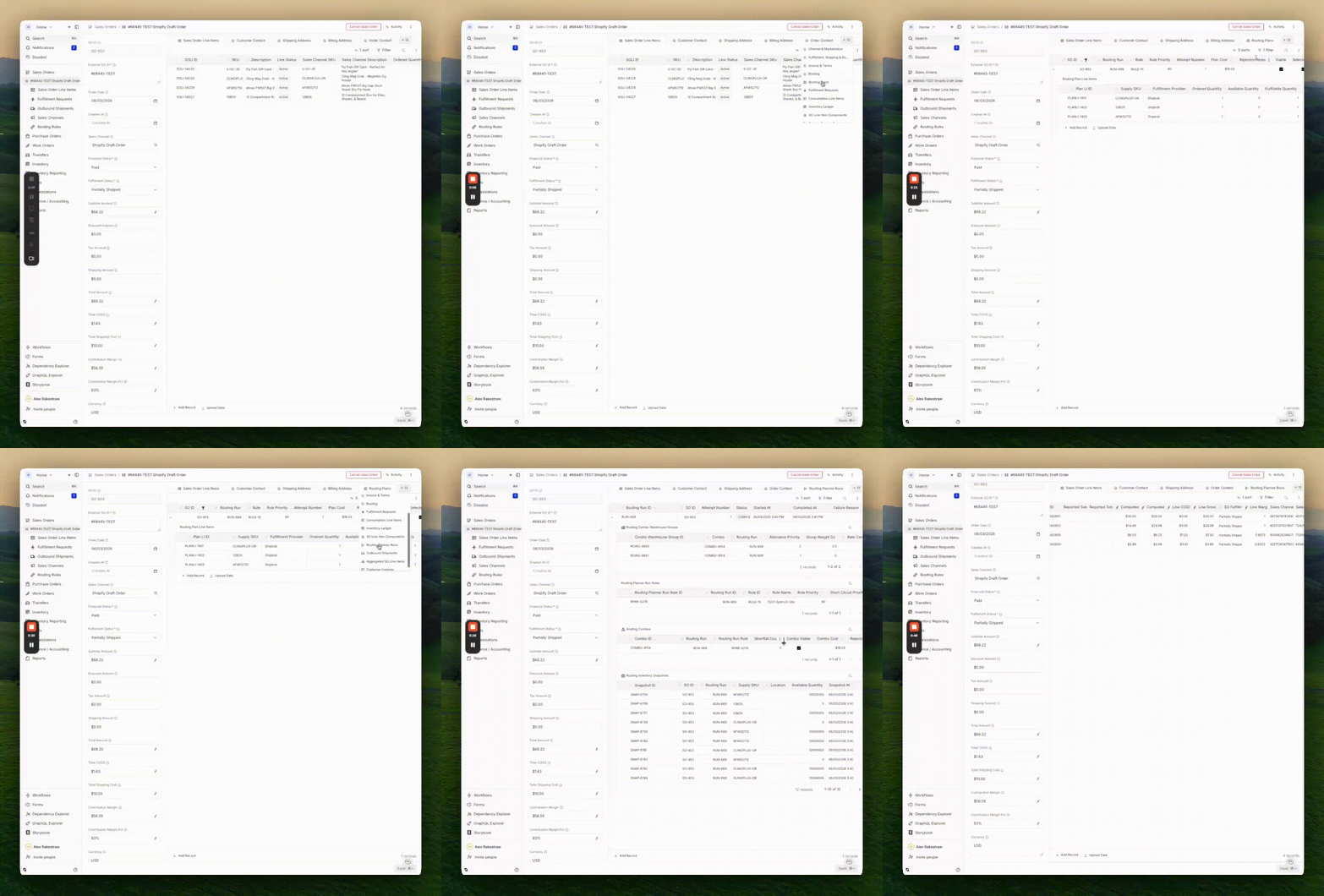
We took everything we’ve learned about running orders and standardized it into our strongest, most complete version yet, so a new deployment doesn’t build up to a full order operation piece by piece. It starts at our best version of OMS on day one, ready to run on the durable data layer we rebuilt this half. Out of the box, it can:
- Pull orders from every channel (starting with Shopify , Amazon , and TikTok ) into one place.
- Split bundles into their component SKUs automatically, so inventory and fulfillment stay accurate.
- Edit, hold, or cancel an order without breaking anything up or downstream of it.
- Auto-route orders to your cheapest 3PL or fulfillment location, with configurable rules.
- Push shipment and tracking details back to the sales channel on their own.
- Handle returns, RMAs, and refunds in the same place.
- Show your true margin and cost on every order, from the moment it lands.
With AI doing the work of fitting OMS to your channels, 3PLs, and products, standing up order capture went from about three weeks of hands-on setup to a short afternoon.
Faster and smarter, every day
Alongside the big structural work, day-to-day operations got faster and sharper.
Speed first, because the gains are real. Forms now load and respond 3-200x faster as you fill them out. Tables run 5-20x faster and stay smooth even while processing large jobs in the background. The activity feed loads about 100x faster, and you can export a table of any size instantly instead of contacting support. That means the core application keeps up when you’re moving quickly, especially during heavy operations.
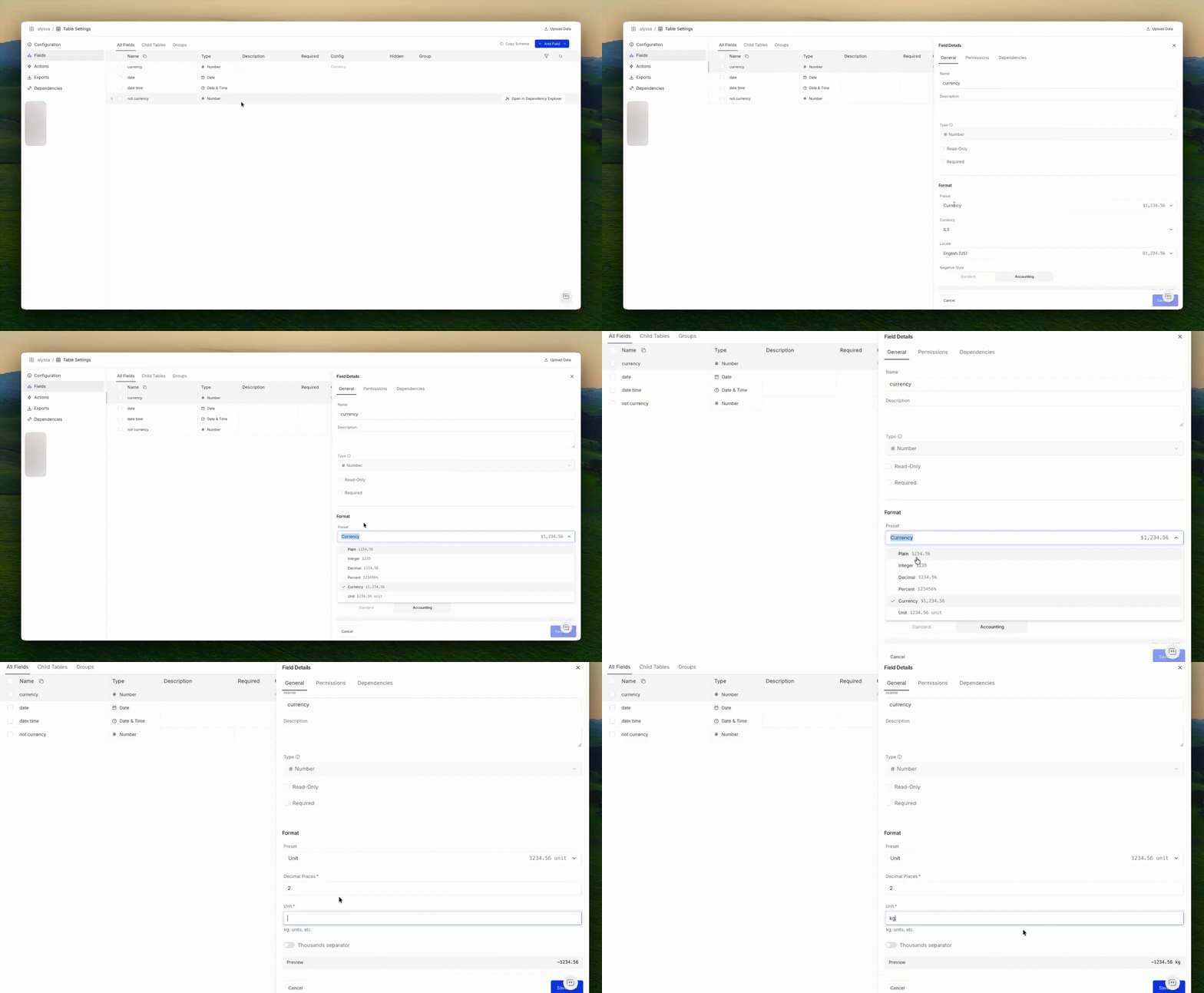
Tables are where your operation lives in DOSS: the orders, inventory, and records your team works from instead of a pile of spreadsheets. The more they can do, the less your team exports and reconciles by hand.
This half they got more useful. They pick up dynamic buttons, like an “Approve” button that appears on a pending invoice but not one that’s already approved, plus bulk actions to delete or duplicate hundreds of rows at once. Pulling details from linked records and cross-table filtering mean you can work across related data without copying columns over. And custom formatting means your numbers, currencies, and dates show up clean everywhere they appear, including the charts and pivots in DataStudio .
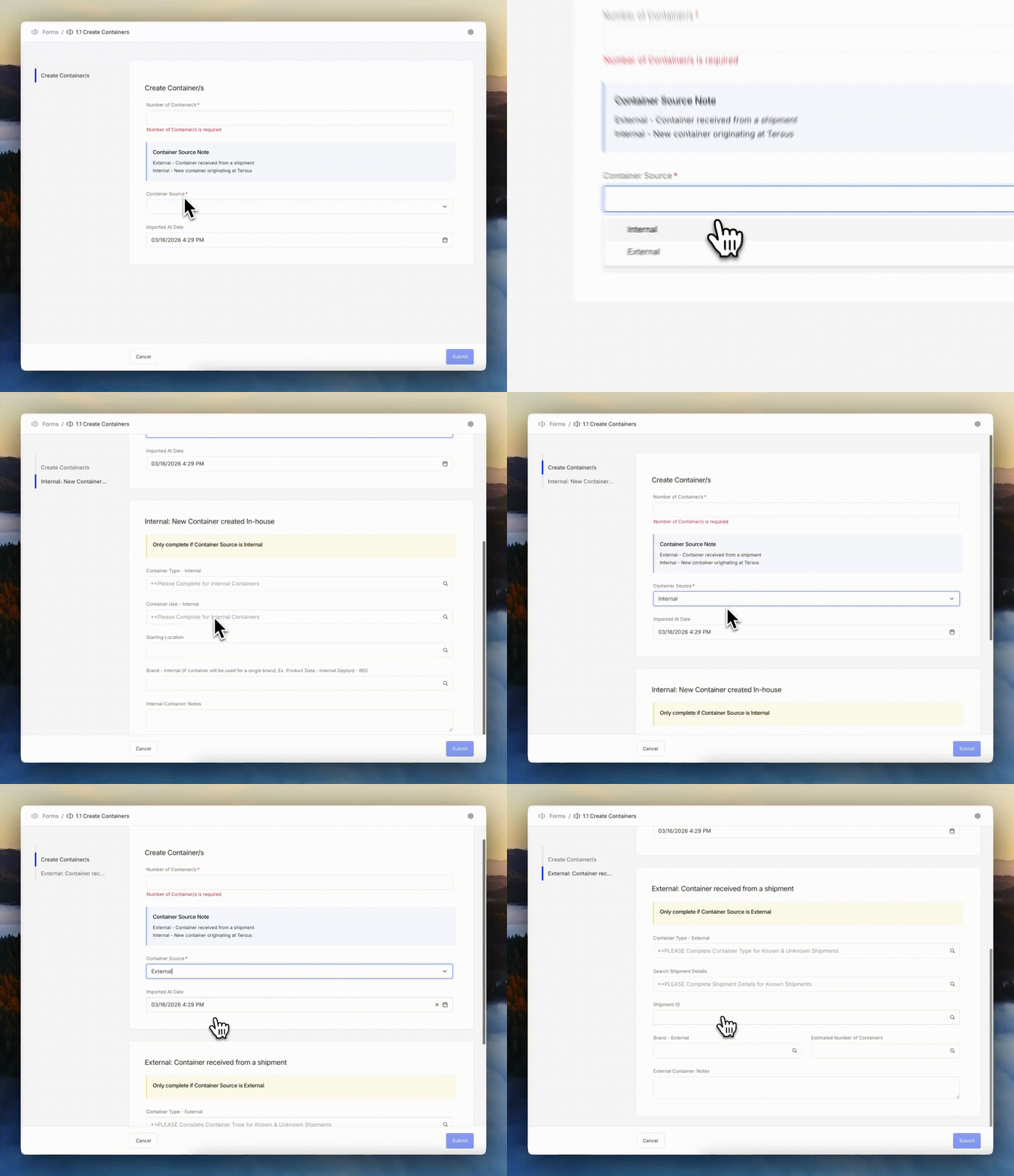
Forms are how data gets into DOSS: the entry points your team, vendors, and warehouse use to capture orders, receipts, and updates. Get them right and everything downstream runs on clean data instead of cleanup.
This half they got smarter. They validate as you go, catching a back-dated invoice or a duplicate PO number before submission rather than after. They adapt to show only the fields that matter for the choices you’ve made, so a long form becomes a short one. They can be shared pre-filled, so a vendor or a teammate isn’t re-entering what you already know. They link straight to your tables, so you update a table field once and it updates in every form that uses it. And they’re fully keyboard-navigable, which matters when your team is entering hundreds of line items on a warehouse floor instead of working from a desk with a mouse.
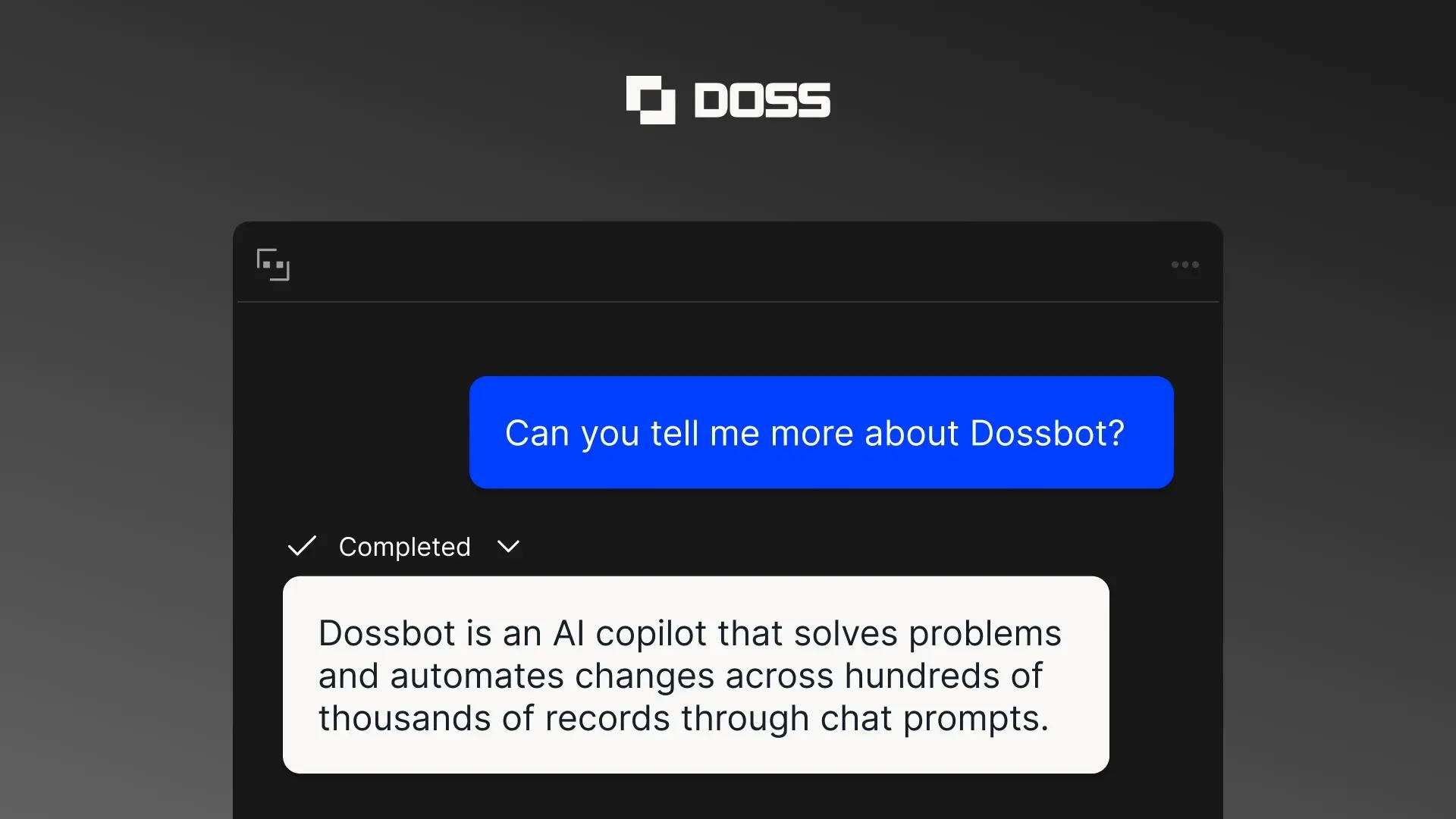
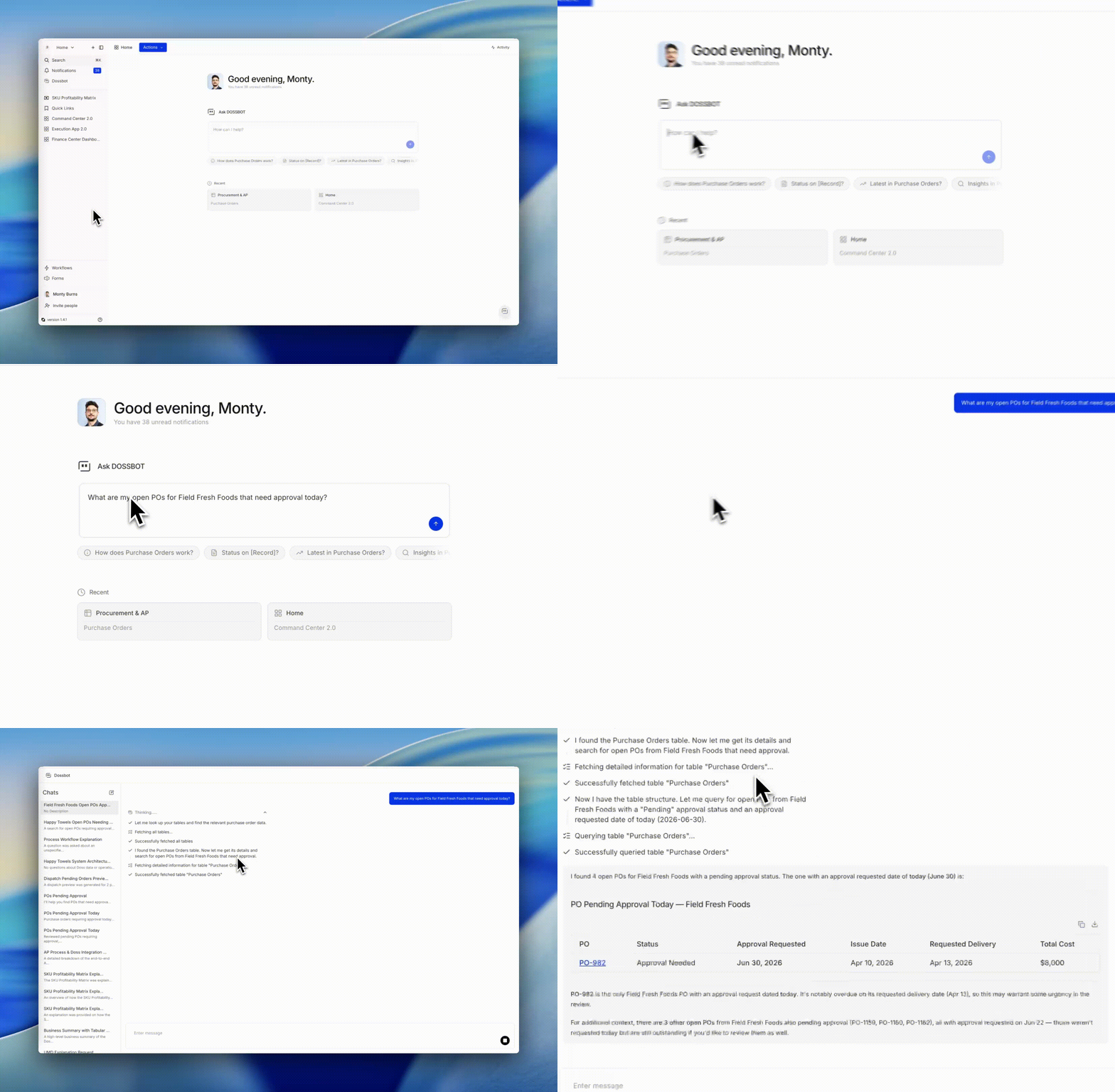
Dossbot , the AI assistant that lets you ask the business questions and have it make the change, now greets you on a redesigned home screen and runs natively in the mobile app. It’s there whether you’re at your desk or out on the floor.
Where we’re headed
That’s a wrap on this half: a platform you can trust at scale, the first operation that arrives pre-built, and a faster day-to-day on top. We’re already extending the same approach with more of your operations arriving pre-built by AI across modules like inventory and procurement, and opening your data so the tools and AI you already use can plug straight into DOSS.
When the next big order comes in, getting it out the door shouldn’t come down to a spreadsheet nobody trusts. That’s the operation we’re building toward, and this half put the foundation in place.