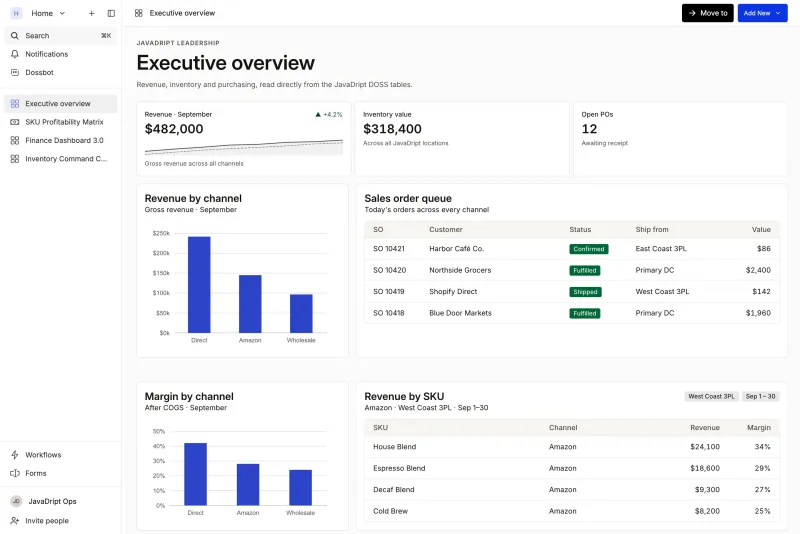






DOSS vs Odoo
Adapt your operations without coding.
Odoo is highly customizable through modules and developer support. DOSS gives operators no-code control across inventory, purchasing, and fulfillment.

No custom modules required
Upgrades that don’t break workflows
Operator-first configuration








There are plenty of reasions to choose DOSS over Odoo

Simplify operational complexity

DOSS adapts to you
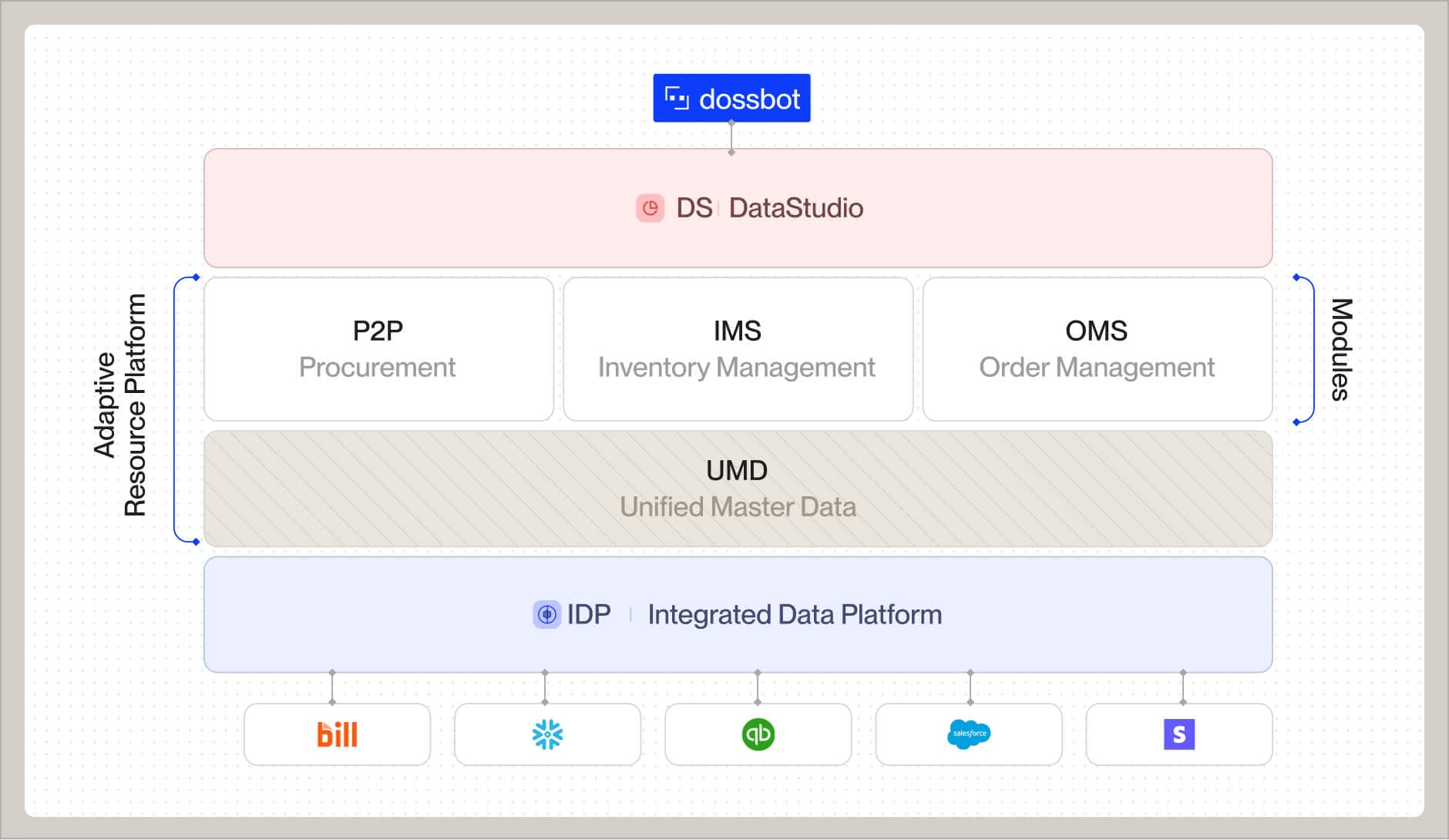
Centralize your operational logic.
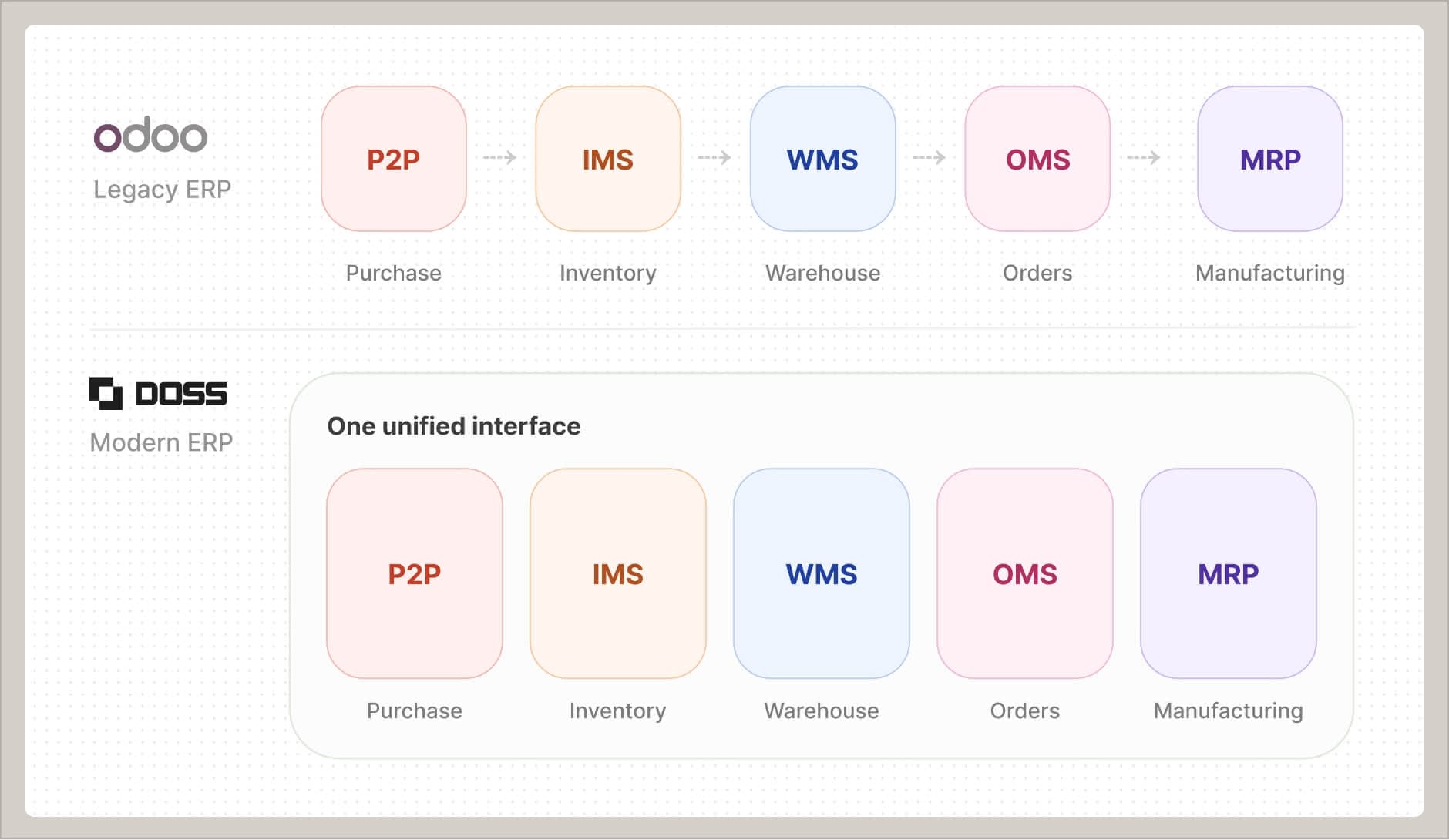
In Odoo, workflows, rules, and extensions often live across multiple modules and custom apps. As systems grow, maintaining that logic becomes increasingly technical. DOSS centralizes schemas, automation, and cross-functional workflows in one unified platform with a Unified Master Data model, so you can unify operations in one holistic platform.

Fast to setup and scale
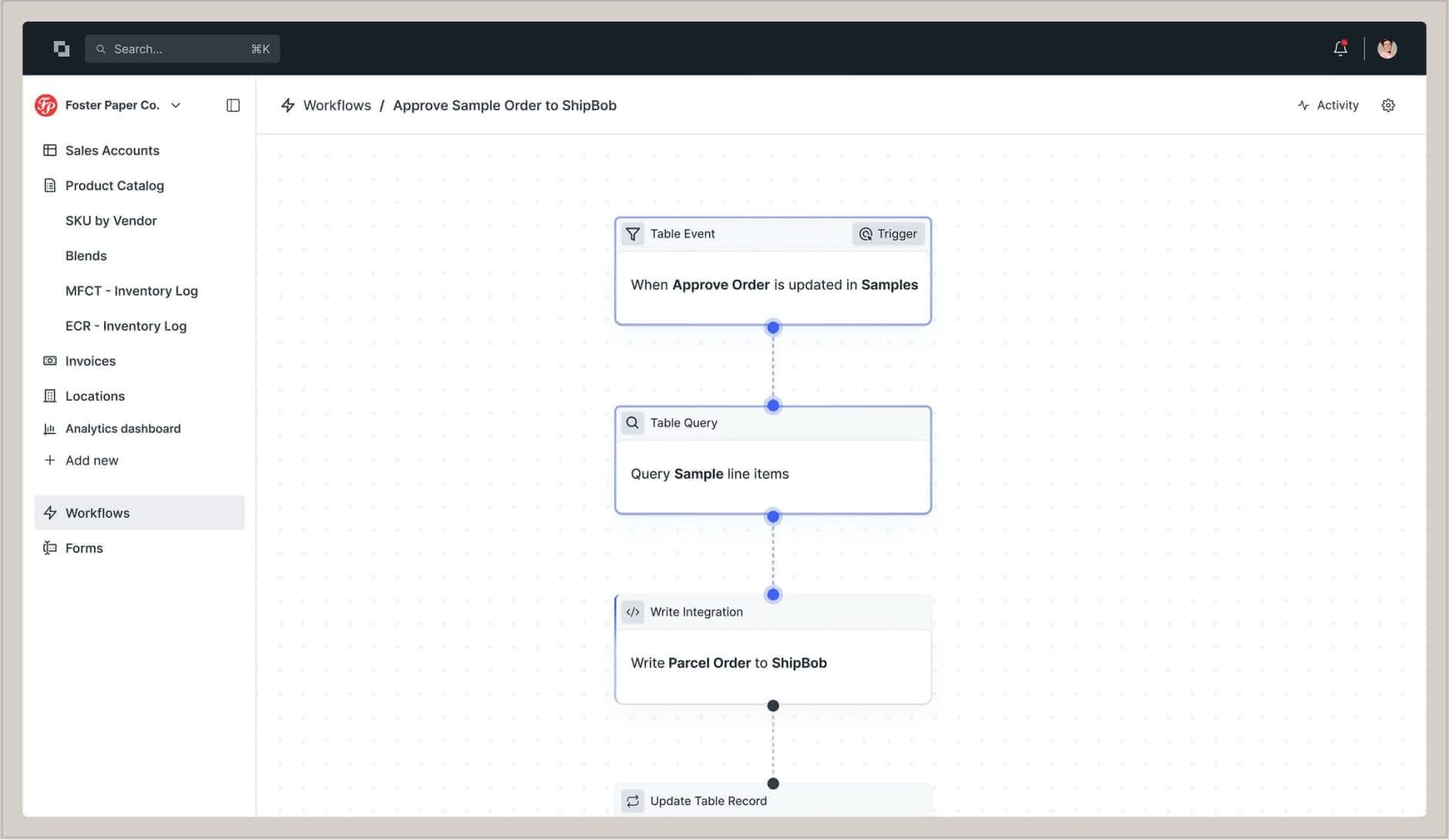
Configure without writing custom code.
Odoo’s modular architecture is powerful, but tailoring workflows beyond standard apps often requires technical configuration or developer support. As custom modules accumulate, complexity increases. DOSS enables operators to adjust schemas, workflows, and automations in clicks. Adapt in minutes without creating custom code dependencies.

Easy to customize
Adapt without upgrade anxiety.
Odoo’s flexibility often relies on third-party or custom modules. As extensions accumulate, upgrades introduce conflicts that require testing, rework, or dev support. DOSS uses a composable architecture with backward-compatible configuration, so you can evolve workflows and capabilities without worrying about module conflicts or version breakage.
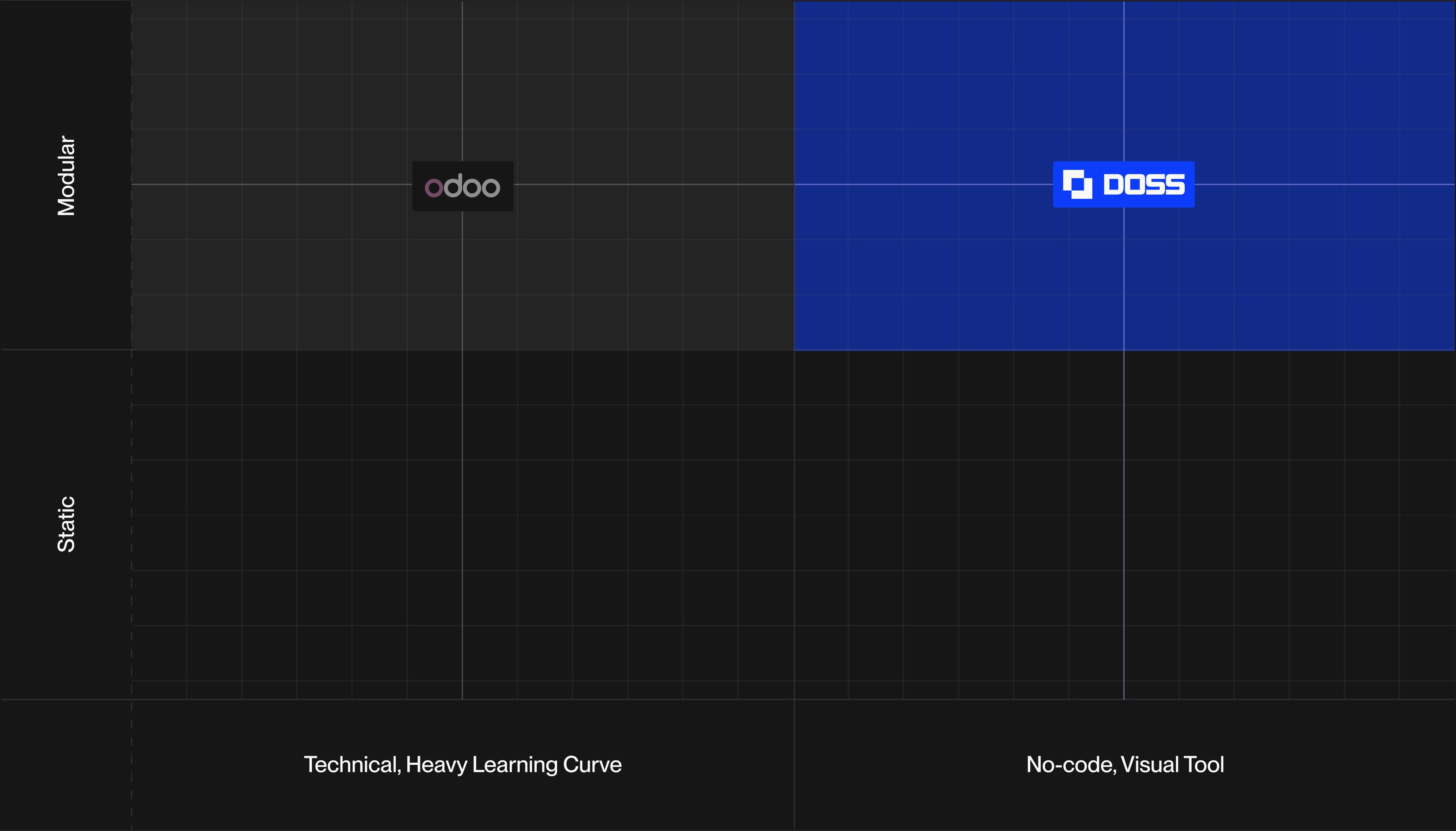
DOSS vs. Odoo
While Odoo is a feature-rich, open-source ERP, it comes with a steep technical learning curve and lack of support for the necessary implementation. Get everything you need in Doss, no code required. Why have any features if you can't use them?



Upgrade to DOSS
Fast to deploy. Easy to change. Built to scale.