Every consumer brand founder eventually has this conversation. An investor, a fractional CFO, or a new operations hire looks at the pile of spreadsheets holding the business together and says the word: ERP. The advice usually stops there, and the research that follows is worse. Ask what an ERP system is and you will get a different answer from every vendor, each one conveniently shaped like the product they sell.
The confusion is expensive. Founders either buy too early and burn a year implementing software built for a company three times their size, or they wait too long and watch their team spend entire days reconciling inventory counts across tabs and inboxes. Both mistakes come from the same place: nobody explains the category in plain language.
This guide does. It covers what an ERP system actually does, why the category has such a bad reputation, and how to know when your brand is ready for one. No procurement-committee jargon, no 40-point feature matrix. Just what a founder needs to know before signing anything.
What an ERP System Actually Does
An ERP (enterprise resource planning) system runs your core business operations on one shared database. Procurement, inventory, orders, fulfillment, and finance all read and write the same records, so a change in one place shows up everywhere else without anyone re-keying data.
That single-database idea is the entire point. Consider what happens when a pallet of product arrives at your warehouse. In a connected system, receiving that shipment closes out the purchase order , increases on-hand inventory, updates your landed cost, and posts the right entries toward your books. One event, recorded once, visible to everyone. Without an ERP, that same pallet triggers an email to the bookkeeper, a manual update to the inventory spreadsheet, and a note to follow up on the invoice. Three people touch it, and the numbers still might not match at month-end.
The "modules" vendors talk about are just the functional areas sitting on that shared database: a procurement module for buying, an inventory module for stock, an order module for selling, a finance module for money. What makes it an ERP is not the list of modules. It is the fact that they share one source of truth.
Why Every Vendor Gives You a Different Definition
The term ERP covers a huge range of software, which is why the answers you get are so inconsistent. At the top sit enterprise suites like SAP and Oracle, built for multinationals with dedicated IT departments. In the middle are mid-market systems like NetSuite and Microsoft Dynamics, which is what most people mean when they tell a growing brand to "get an ERP." At the entry level, inventory tools like Cin7 and Fulfil borrow the label to signal they do more than count stock.
Accounting platforms muddy the water further. QuickBooks with a stack of connected apps is sometimes pitched as a starter ERP. It is not one. The apps sync on schedules, disagree with each other, and leave you doing reconciliation work that a shared database would make unnecessary.
A useful filter: if the software cannot connect a purchase order, an inventory movement, and a financial entry as one linked chain of records, it is not really an ERP, whatever the marketing says.
The Problems an ERP Is Supposed to Solve
Consumer brands do not buy ERPs because they love software. They buy them because specific operational problems start costing real money:
- Reconciliation eats the team's week. Inventory lives in one tool, orders in another, purchasing in email. Someone spends hours every day making the numbers agree instead of acting on them. A proper inventory management foundation removes that job entirely.
- Nobody trusts the stock count. When your warehouse, your 3PL, and your Shopify store each report different availability, you oversell, you rush-order, and you disappoint retail partners. Accurate counts prevent stockouts and the expensive air freight that follows them.
- Orders fall through the cracks. Wholesale, DTC, and marketplace orders follow different rules, and manual routing breaks as volume grows. Connected order management keeps every channel moving through one workflow.
- Purchasing runs on gut feel. Without linked demand and supplier data, procurement becomes reactive: you order too late, pay too much, and find out at month-end.
- You cannot see your real margins. Landed costs, freight, and channel fees live in different places, so unit economics are a quarterly research project instead of a daily number.
If none of these sound familiar, you probably do not need an ERP yet. If three of them sound like last week, you are already paying for one in payroll; you just do not have the software.
What Traditional ERPs Get Wrong
The category's bad reputation is earned. Legacy ERP implementations routinely take 12 to 18 months, and industry surveys consistently find the majority run over budget or fail to deliver the value originally proposed. For a consumer brand, that can mean an implementation costing more than the software license, timed perfectly to distract the team through two peak seasons.
The deeper problem is rigidity. Traditional ERPs were designed decades ago around fixed data structures, and businesses are expected to conform to them. When your operations change, adding a channel, switching 3PLs, launching a bundle, the system does not adapt with you. Every adjustment becomes a consultant engagement or a dev ticket measured in months.
Antonio Landa, Senior Operations Manager at the beverage brand De Soi, described the experience of evaluating the category this way: "A lot of other ERP systems were very rigid and you had to conform around what they'd already built." That is the trade founders have historically been offered: unified data in exchange for operational flexibility. It is why so many brands stay on spreadsheets far longer than they should. The spreadsheets are painful, but at least they bend.
When a Consumer Brand Is Actually Ready
There is no magic revenue number, but the readiness signals are consistent across CPG, food and beverage, and health and beauty brands:
- Someone on your team can quantify, in hours per day, the time spent reconciling inventory, orders, or purchasing across tools.
- You are adding a second warehouse or a 3PL , and stock visibility across locations is about to get harder.
- A retail partner is asking for EDI, and your current tools cannot speak it.
- Your SKU count has grown past the point where one person can hold the catalog in their head, especially with variants and bundles.
- Month-end close takes weeks because operational data has to be rebuilt by hand before finance can use it.
Two or three of these together mean the operational complexity has outgrown the tooling. Waiting another year does not save money; it just moves the cost into headcount, errors, and slower decisions.
Founders sometimes frame the decision as spreadsheets versus software, but the honest comparison is spreadsheets plus people versus software. If reconciling data across tools takes your team 15 hours a week, that is most of a full-time hire spent producing numbers instead of using them, before counting the cost of the decisions made on stale or wrong data.
What to Look For in Your First ERP
Evaluate any system, including ours, against four questions. How fast will we see value, in months or in years? Can our own team change a workflow, or does every adjustment require a consultant? Does it connect natively to the tools and partners we already use, from Shopify to our 3PL? And is the pricing predictable as we grow, or does every module and change order cost extra?
DOSS Operations Cloud was built as a direct answer to those questions. It gives consumer brands the connected procurement, inventory, order, and finance operations of an ERP without the legacy trade-offs: customers typically go live in 4 to 6 months with value delivered iteratively along the way, and workflow changes take minutes instead of consultant engagements. The platform is composable, meaning it molds to how your business actually operates rather than forcing your team into templated processes, and it keeps adapting as you add channels, suppliers, and warehouses.
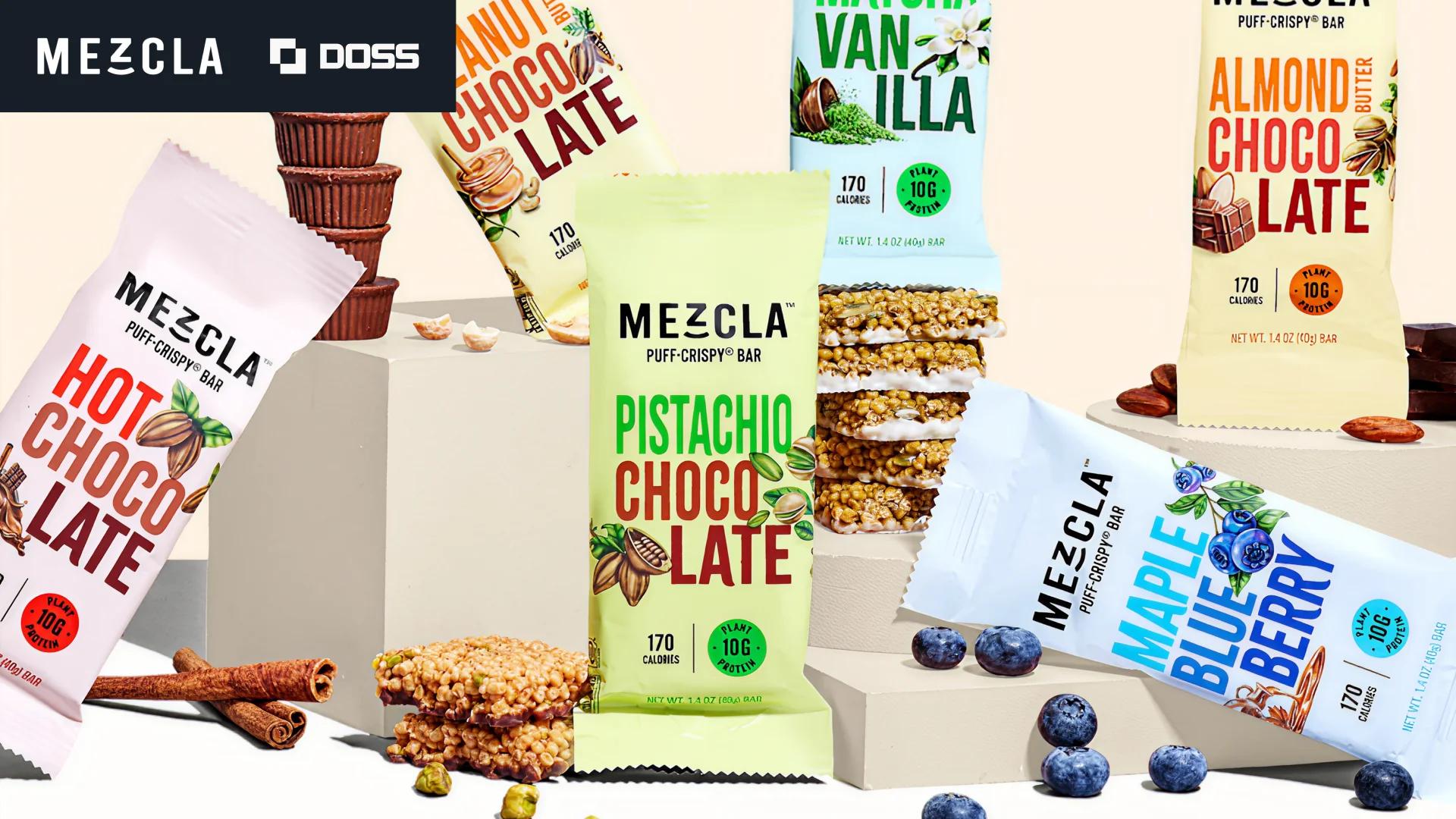
The results show up in operator terms. Mezcla, a sports nutrition brand, saved more than 12 hours per week and doubled its PO processing speed after moving its operations onto DOSS. Verve Coffee Roasters cut unbatched orders from 30% to 1% in its first four weeks on the platform, saving its manufacturing team more than 20 hours weekly.
The Plain-English Bottom Line
An ERP system is one database for running your business, so your team stops reconciling data and starts acting on it. The category earned its scars from decade-old architectures and consultant-heavy implementations, not from the idea itself. The idea is sound, and at a certain scale, it is unavoidable.
If your brand is hitting the readiness signals above, the question is not whether to unify your operations but which system can do it without consuming a year of your company's life. DOSS Operations Cloud connects inventory, orders, and procurement in one place, integrates with the tools you already run, and gets you live in months. If you want to see what that looks like against your actual workflows, talk to our team.