Most growing operations teams can tell you exactly what they pay their top ingredient supplier, their primary co-packer, and their core packaging line. Ask about the fourth freight carrier they used last quarter, the local vendor who supplied a rush pallet of shrink wrap during a shortage, or the one-off print run for labels after the first batch came in short, and the answer gets fuzzy fast. That fuzziness is what tail spend management exists to fix, and for most $50 to $500 million product businesses, it's the difference between margin earned back through negotiation and margin that quietly disappears.
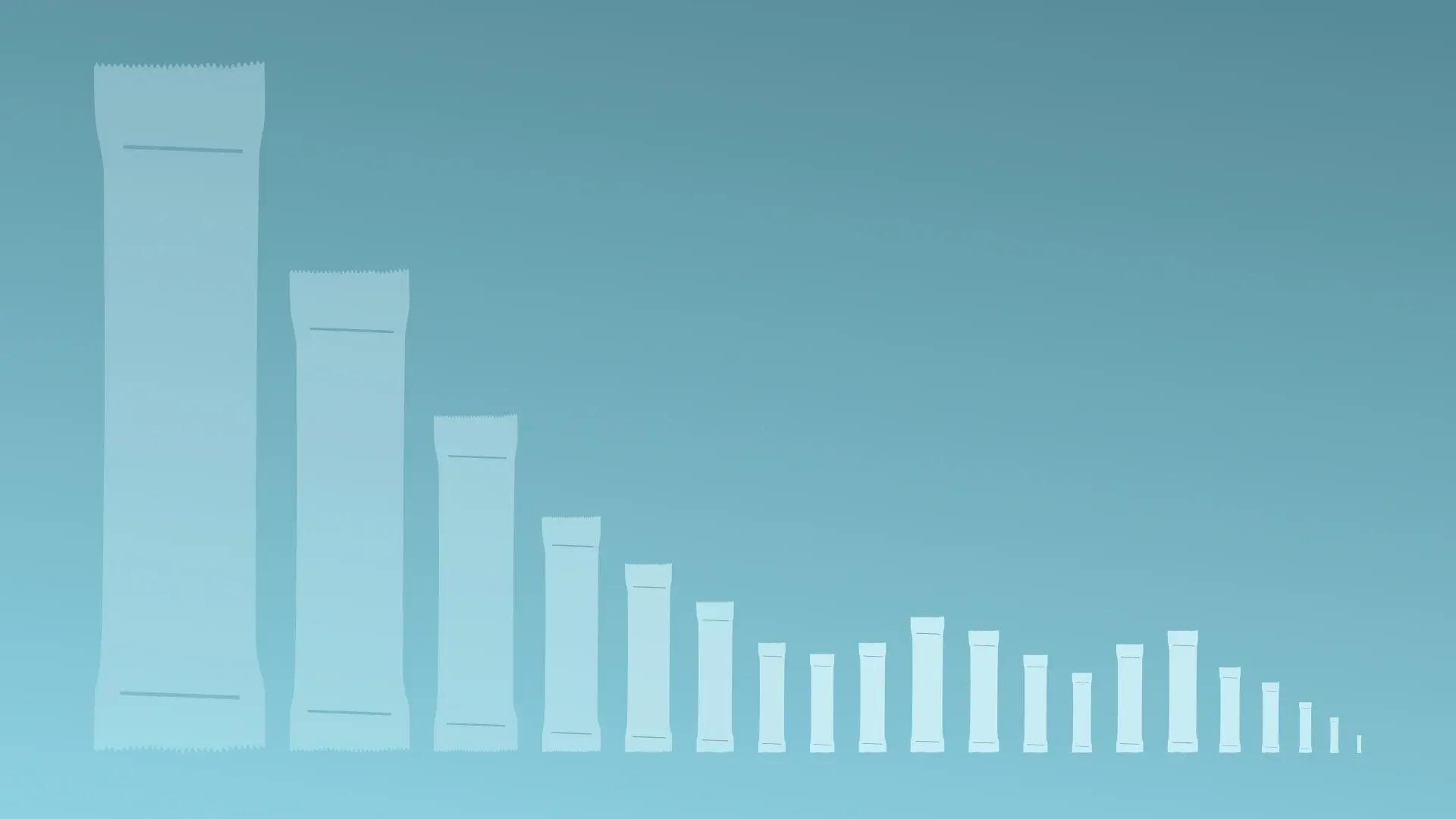
The math behind this is familiar to any operator who has looked at a supplier list. A small number of vendors, usually the ones with signed contracts and dedicated account managers, account for most of the dollars spent. Everyone else, the hundreds of smaller, one-off, or infrequent vendors, makes up a shrinking share of transactions but a surprisingly large share of total spend once it's added up. That long tail routinely runs 15 to 30 percent of total procurement spend, with none of the negotiated pricing, purchase order discipline, or visibility applied to the top vendors.
This piece breaks down what tail spend management actually means, why ERPs and spreadsheets consistently miss it, and what it takes to bring that spend into the same light as everything else a procurement team already tracks.
What Is Tail Spend Management?
Tail spend is the portion of a company's procurement spend made up of purchases that are low-value, high-frequency, or one-off, falling outside strategic sourcing relationships. It includes things like emergency freight, replacement parts, small equipment rentals, rush print runs, or a one-time vendor brought in to cover a supply gap. Individually, none of these purchases are big enough to warrant a negotiated contract or a dedicated buyer. Collectively, across a few hundred vendors and a full year, they add up to real money.
Tail spend management is the discipline of tracking, categorizing, and controlling that spend with the same rigor applied to strategic vendors, even though no single purchase in the tail is large enough to justify that rigor on its own. The goal isn't to negotiate every $200 purchase order. It's to make the tail visible enough that patterns show up: the vendor quietly used a dozen times last year who could be consolidated, the recurring rush order that signals a planning gap, the spend that should have gone through a purchase order and didn't.
A useful test: pull the vendor list for any given month and count how many suppliers received a single payment under $1,000. For most growing brands, that list runs into the dozens, sometimes the hundreds. Each of those payments is small enough to feel irrelevant on its own. None of them are tracked as a category anyone owns.
Why Tail Spend Slips Through the Cracks
Most ERPs treat every purchase order as equal regardless of size, which sounds fair until the workflow and approval overhead built for a $500,000 raw material contract gets applied, or more often skipped entirely, for a $300 emergency purchase. Teams route around the friction. A purchase gets made on a company card, invoiced directly, or approved over Slack, and the visibility that would have shown up in a proper purchase order never gets created.
Spreadsheets fail for the opposite reason. They're flexible enough to track anything, which is exactly the problem: every team builds its own version, nobody reconciles them against actuals, and by the time finance closes the books, the tail spend is buried inside a general ledger code instead of tied to a vendor, a SKU, or a reason.
Procurement teams themselves are usually sized and incentivized around strategic sourcing. The headcount and tools exist to negotiate the top twenty vendors. Nobody is tasked with reviewing purchase order 4,412 for a one-time pallet rental, so it never gets reviewed. As a brand adds SKUs, channels, and co-manufacturing partners, the number of small, irregular vendors grows faster than the number of strategic ones, which means the blind spot grows precisely as the business scales.
The Cost of Ignoring the Tail
Ignoring tail spend does not show up as a single bad decision. It shows up as a slow leak. A brand running 3PL and co-man relationships across multiple regions might have forty different vendors billing for similar freight and drayage services, each negotiated independently or not negotiated at all, when five consolidated vendors could handle the same volume at a better rate.
It also shows up as compliance exposure. Purchases made outside a formal PO process are harder to trace during an audit, harder to reconcile against budget, and harder to explain when a board member or investor asks where a specific dollar went. For a company preparing for a raise, an acquisition, or simply a cleaner monthly close, that lack of traceability is its own cost.
And it shows up in the number operators care about most: margin. A rush order placed because nobody flagged a shortage two weeks earlier almost always costs more than the same order placed on a normal cycle. Multiply that across a year of small emergencies and the tail spend line item stops looking small. For a $150 million housewares or CPG brand, a tail running at even 20 percent of a $30 million procurement budget represents $6 million moving through the business with no negotiated pricing and no consolidated view. A five percent improvement on that number, through consolidation and better visibility alone, is real money without a single new supplier contract signed.
How to Bring Tail Spend Under Control
The instinct to fix tail spend by negotiating every small vendor individually is the wrong instinct. That approach costs more in procurement time than it saves. The better path starts with visibility: every purchase, regardless of size, routed through a system that captures the vendor, the reason, and the cost, so patterns can surface on their own.
From there, categorization matters more than negotiation. Grouping tail spend by type (freight, packaging, MRO, and professional services) makes it possible to spot which categories are genuinely one-off and which are recurring enough to consolidate into a real vendor relationship. A vendor used six times a quarter isn't tail spend anymore; it's a supplier relationship that just hasn't been formalized.
Setting a simple purchase order threshold, below which a purchase still requires a lightweight approval and a system record, closes the gap that lets tail spend hide on company cards and side channels. The threshold doesn't need to be low enough to slow the team down. It needs to be low enough that nothing meaningful goes untracked.
Someone also has to own the review, even briefly. A monthly fifteen-minute look at tail spend by category, not by individual transaction, is enough to catch the vendor who should be consolidated or the recurring rush charge that points to a planning problem upstream. Without an owner, even a well-designed threshold and a clean category structure will quietly stop getting checked.
Where DOSS Fits
DOSS Operations Cloud gives operators one system where every purchase order, whether it's a multi-million dollar raw material contract or a same-day pallet rental, lives with the same visibility. Procurement teams see spend by vendor, category, and cost center in real time through DataStudio, instead of waiting for a monthly close to find out where the tail spend went.
Because DOSS's procurement module runs on the same Unified Master Data (UMD) as inventory and orders, a tail spend pattern, like a recurring rush freight charge tied to a specific SKU , shows up connected to the inventory decision that caused it. Teams stop treating tail spend as background noise and start treating it as a signal about where the underlying operation needs to change.
A no-code workflow can route any purchase order under a set dollar threshold through a lightweight approval automatically, so the threshold discussed above becomes something the system enforces rather than something a policy document asks people to remember. That change takes minutes to configure inside DOSS, not a change request to an outside implementation partner.
Conclusion
Tail spend management isn't about squeezing every small vendor for a better rate. It's about refusing to let a fifth of procurement spend operate outside the visibility that governs the rest of the business. For a growing brand adding SKUs, channels, and suppliers every quarter, that tail only gets longer. Bringing it under one roof, with purchase orders, vendor data, and cost visibility connected to inventory and orders instead of scattered across company cards and spreadsheets, is what turns tail spend from a hidden cost into a managed one. DOSS Operations Cloud gives operators that visibility from day one, with implementation measured in months instead of the year-plus most legacy ERP rollouts take.