Vendor management best practices are straightforward to describe and surprisingly hard to execute. The goal is clear: reliable suppliers, accurate pricing, consistent lead times, and enough visibility to catch problems before they become stockouts. Most consumer goods companies know what that looks like, but have gaps in the systems used to maintain them.
Vendor data in most $10M to $200M consumer goods operations is scattered. Some of it lives in the ERP, and some in a shared spreadsheet that someone updates manually. A lot of it also lives in email threads and someone's memory. When you need to make a procurement decision, you're pulling from three different sources and hoping they agree.
That's not a process problem, it's a data problem. Fixing it requires a system that connects vendor information to purchasing activity, keeps it current without manual intervention, and makes it accessible to everyone who needs it.
Why Vendor Management Breaks Down at Scale
Most consumer goods companies start managing vendors informally. A shared contact list, email for purchase orders, and whatever the ERP tracks. That approach works at 10 suppliers. At 50, it starts to strain, and at 150, it fails.
The breakdown happens because vendor information accumulates in silos. The category manager has the pricing history. The ops team has the lead time notes. Finance has the payment terms. Nobody has everything, so everybody makes decisions with incomplete information.
Lead time variability is where this hurts the most. When a supplier's actual delivery time drifts from what's documented, inventory planning goes wrong. The people building replenishment plans are working off stale data, and by the time the discrepancy surfaces, you're already facing a potential stockout.
The problem compounds as you add SKUs and suppliers. What worked at 20 active vendors becomes unmanageable at 80. Your team did not get worse at their jobs as the scale grew, the information architecture simply doesn't scale.
What Existing Solutions Get Wrong
Two tools dominate vendor management in consumer goods: ERPs and spreadsheets. Both have fundamental limitations.
ERPs are built for rigidity. They enforce process but don't support the relationship-driven, judgment-intensive work that procurement involves. Getting vendor data into an ERP is configuration-heavy, and getting it out in a useful form requires building reports. Every update requires manual entry, whether that's new pricing, revised lead times, or a new contact, and that only happens when someone remembers to do it.
Spreadsheets are the opposite problem. Flexible, accessible, and completely disconnected from operational data. A spreadsheet can store vendor contacts and pricing notes, but it doesn't alert you when a supplier is running behind on an open purchase order . It doesn't surface that a vendor's on-time rate has dropped from 96% to 74% over six months. It captures information, but it doesn't generate insight.
The problem isn't the tools themselves. ERPs do what they're designed to do. Spreadsheets do what they're designed to do. The problem is that growing consumer goods companies need something neither was built for: a system that manages multi-supplier procurement in a way that connects to inventory planning, order fulfillment, and financial performance at the same time. That's a different problem, and it requires a different kind of system.
Vendors Are a Procurement Asset
Most companies treat vendor management as a maintenance task. Keep the contact lists current, chase down updated pricing, follow up on late shipments. That frame makes it reactive and low-priority until something goes wrong.
The better frame is to treat your vendor relationships as a procurement asset. A supplier with reliable lead times, strong communication, and a documented performance history is worth more than one with slightly lower unit costs and unpredictable delivery. But making that comparison systematically requires data that most procurement systems don't organize.
When vendor information is centralized, connected to purchasing activity, and updated in real time, procurement decisions improve across the board. You can see which suppliers are consistently late, and negotiate from a position of documented performance. You can identify which vendors handle volume increases well and which ones start to slip when you scale up order frequency.
The shift is from managing vendors reactively to managing them strategically. That's what great supply chain management at scale looks like: not just keeping track of suppliers, but actively building the relationships and data infrastructure that give you leverage.
Vendor Management Best Practices That Scale
Here's what effective vendor management looks like for consumer goods companies operating at $10M to $500M in revenue.
- Centralize vendor data in one system. Every contact, every contract, every price list, every lead time in one place. Not a better spreadsheet, but a system connected to your purchasing activity so the person creating a PO has the same information as the person approving it.
- Connect vendor records to PO history. A vendor profile disconnected from purchasing data is a contact list. When vendor records include PO history, pricing trends, and fulfillment rates, they become useful for decisions instead of just documentation.
- Track promised lead time versus actual lead time. This single metric is more useful than almost any other vendor performance measure. Track it by supplier over rolling quarters, and you'll have the data you need to make better inventory planning decisions and stronger negotiating arguments.
- Build a repeatable onboarding process. New vendor onboarding is often informal, which means steps get missed: W-9s, certificates of insurance, compliance requirements, and bank details. A documented onboarding workflow with clear steps cuts the time from vendor approval to first PO and reduces errors that create problems downstream.
- Review vendor performance on a defined schedule. Quarterly reviews don't need to be elaborate. If the data is already organized, a review takes 30 minutes. The goal is catching performance trends early, before a supplier's declining on-time rate becomes an inventory crisis.
- Use performance data in negotiations. Walking into a vendor negotiation with a year of delivery history, pricing data, and volume trends changes the conversation. Most procurement teams negotiate without that context. The ones that use it tend to get better outcomes on pricing, lead times, and payment terms.
How DOSS Operations Cloud Handles This
The DOSS Operations Cloud procurement module is built for the way consumer goods companies buy.
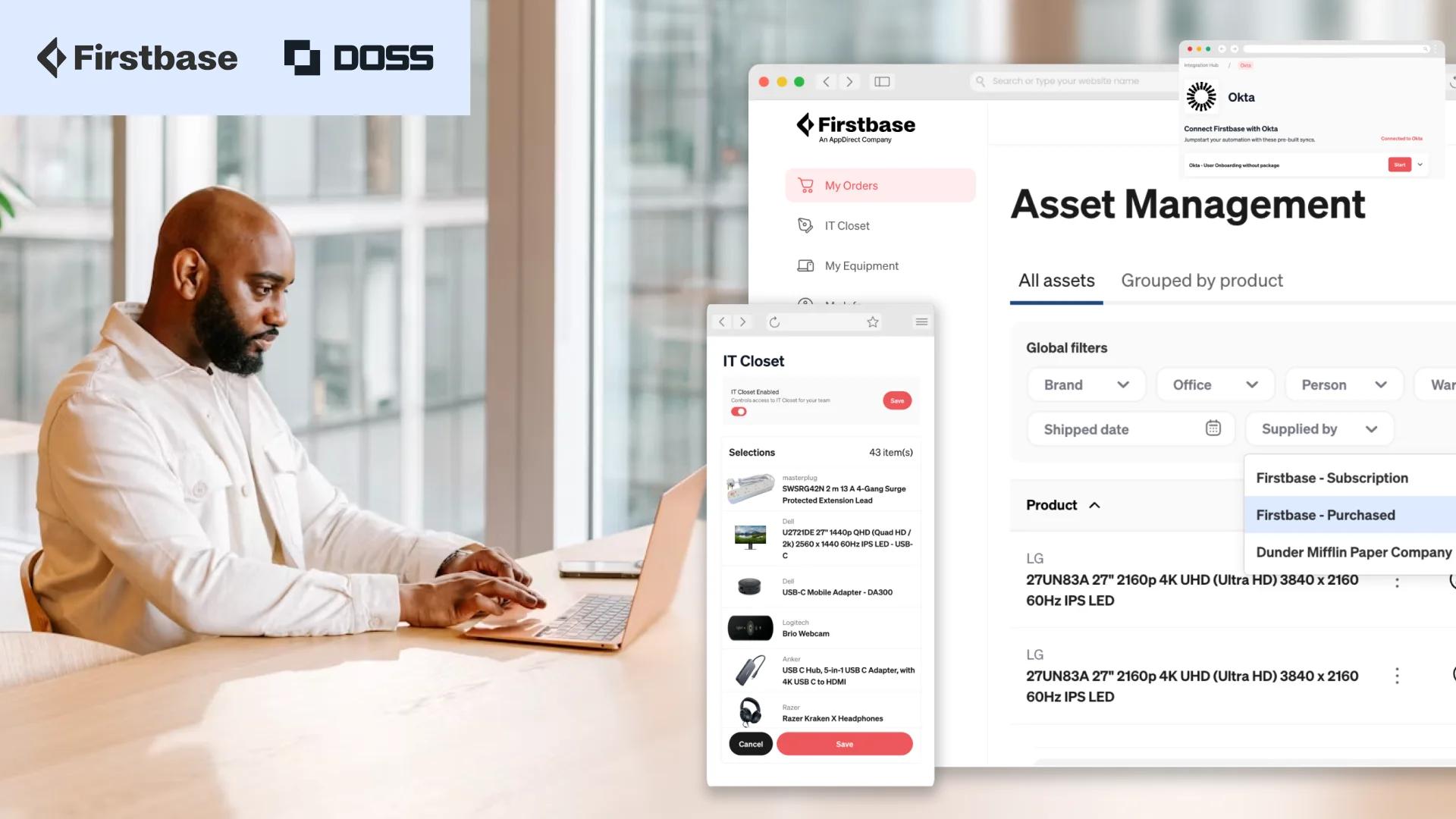
Vendor profiles in DOSS centralize everything: contacts, pricing tiers, lead times, certifications, and performance history. When a buyer creates a PO, the system pulls approved vendor pricing and lead times automatically. No manual lookup, no risk of using outdated information.
When orders ship, DOSS tracks fulfillment against the PO and updates the vendor's delivery record in real time. Over time, that data builds into a performance history available to anyone who needs it. No separate reports to maintain and no spreadsheet to keep current.
The inventory management and order management modules connect directly to procurement data. When a supplier is running late, DOSS can model the downstream impact on inventory and open orders, giving ops teams time to respond before the stockout happens.
Dossbot, the DOSS AI assistant, surfaces vendor insights in plain language. Instead of building a report to check which suppliers have the best on-time rates, a buyer can ask Dossbot and get the answer immediately.
The results speak for themselves; Kahawa 1893 scaled operations 30x without adding headcount. Mezcla recovered more than 12 hours per week previously lost to manual work.
Where to Start
Improving vendor management when the current state is fragmented can feel like a big lift. It doesn't have to be.
Start with one supplier category: choose the one with the most active purchasing volume and the most recurring problems as that's where better data will have the most immediate impact. Move everything about those vendors into one system: contacts, contracts, pricing, lead times, and performance notes. Get that process right before expanding to the full vendor list.
From there, connect vendor data to purchasing activity. Even a basic link between vendor records and PO history will change how procurement teams make decisions. The goal isn't a perfect system on day one. It's building the foundation that makes procurement faster, more consistent, and less dependent on institutional knowledge that lives in someone's inbox.
Two things make this easier in practice. First, align the team on what "one system" means. The biggest failure mode in vendor data consolidation is ending up with the same information in multiple places because different team members default to different tools. Second, build the habit of updating vendor records as part of the PO process. When updating lead times or pricing is a natural step in creating a PO instead of a separate administrative task, data stays current with much less effort.
Consumer goods procurement is hard enough without fighting your own systems. If your vendor data is scattered, decisions are slower, errors are more likely, and scaling the business means scaling the chaos. The companies that get this right have better tools, not better discipline.
See how DOSS Operations Cloud supports procurement , or book a demo to see it with your own operations.